
Commercial Solar Battery Storage in London: A 2026 Strategic Case Study

Is your London business paying a "congestion charge" on its energy bills? With average business electricity rates in the capital hovering near 24p per kWh this July, managing overheads has become a relentless challenge for operations managers. You're likely feeling the pressure of volatile prices whilst struggling against London's notoriously limited grid capacity and strict fire safety regulations. It's a difficult environment that demands a more sophisticated approach to power management.
We understand that energy security is now a boardroom priority. By implementing commercial solar battery storage London businesses can transform from passive consumers into resilient energy producers. This 2026 strategic case study demonstrates how bespoke battery systems provide a vital buffer against price spikes and grid constraints. You'll discover how to achieve drastic cost reductions and meet corporate Net Zero targets through precision-engineered storage. We'll examine the impact of the latest BS 7671:2018+A4:2026 safety standards and explore how the Annual Investment Allowance makes these systems a high-yield financial asset for your facility's future.
Table of Contents
Optimising London’s Commercial Energy with Solar Battery Storage
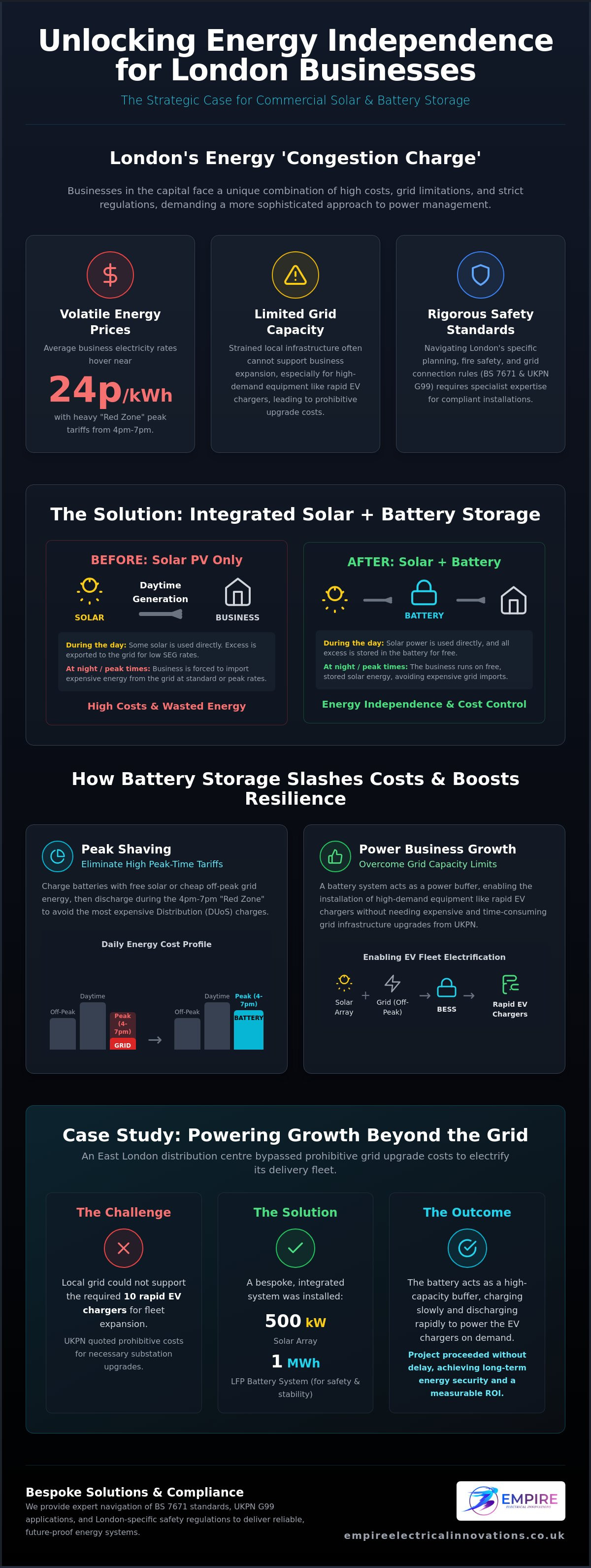
London’s energy market has undergone a fundamental transformation. Businesses no longer view solar panels as a standalone solution for sustainability. In 2026, the strategic priority is self-consumption. Generating green energy is only half the battle; the real value lies in storing that power for use when grid prices peak. By integrating commercial solar battery storage London organisations can bypass the inefficiencies of exporting energy at lower Smart Export Guarantee (SEG) rates whilst paying near 24p per kWh for imported power. This shift represents a move toward true energy autonomy, utilising a battery energy storage system (BESS) to capture excess generation and deploy it with precision.
The city's infrastructure is under unprecedented strain. As businesses expand their digital operations and electrify their fleets, the local grid often lacks the capacity to support new, high-demand equipment. Battery storage is no longer a luxury; it's a technical necessity for growth. Modern systems allow firms to meet strict ESG mandates and Net Zero targets by ensuring that every kilowatt-hour of renewable energy generated on-site is used effectively, rather than lost to the grid. This methodical approach to power management ensures compliance with the latest BS 7671:2018+A4:2026 standards, which now govern stationary battery installations with increased rigour.
The Economic Drivers for London Businesses
Operational costs in the capital are uniquely high. Beyond standard unit rates, London firms face heavy Distribution Use of System (DUoS) charges, particularly during "red zone" peak hours between 4pm and 7pm. A well-designed battery system allows you to "load shift" your consumption. You charge from your solar array or the grid during off-peak windows and discharge when costs are highest. This strategy provides a robust shield against grid instability in high-density urban areas where local infrastructure is often overstretched. Additionally, these systems provide the necessary power buffer for a commercial EV charging infrastructure, enabling rapid charging without requiring expensive, time-consuming grid upgrades.
Future-Proofing with Bespoke Energy Solutions
Generic solar kits often fail in the complex London environment. We focus on bespoke electrical engineering that accounts for specific building orientations, fire safety regulations, and future expansion needs. Modular systems are essential. They allow your storage capacity to grow alongside your business, ensuring your initial investment remains relevant for years. In the 2026 energy landscape, a bespoke BESS represents a critical asset for London businesses seeking to decouple operational growth from grid limitations. This disciplined approach to installation ensures that your facility meets both current financial objectives and long-term environmental commitments. Reliability is built into the design, not added as an afterthought.
Case Study: Delivering Energy Independence for a London Warehouse
A large-scale distribution centre in East London recently faced a critical operational bottleneck. Whilst their rooftop had the physical capacity for a significant renewable installation, the local grid infrastructure could not support their planned expansion. Specifically, the facility required ten rapid EV chargers to electrify its delivery fleet, but UK Power Networks (UKPN) quoted a prohibitive cost for the necessary substation upgrades. This scenario is increasingly common for firms seeking commercial solar battery storage London solutions to bypass local infrastructure limitations.
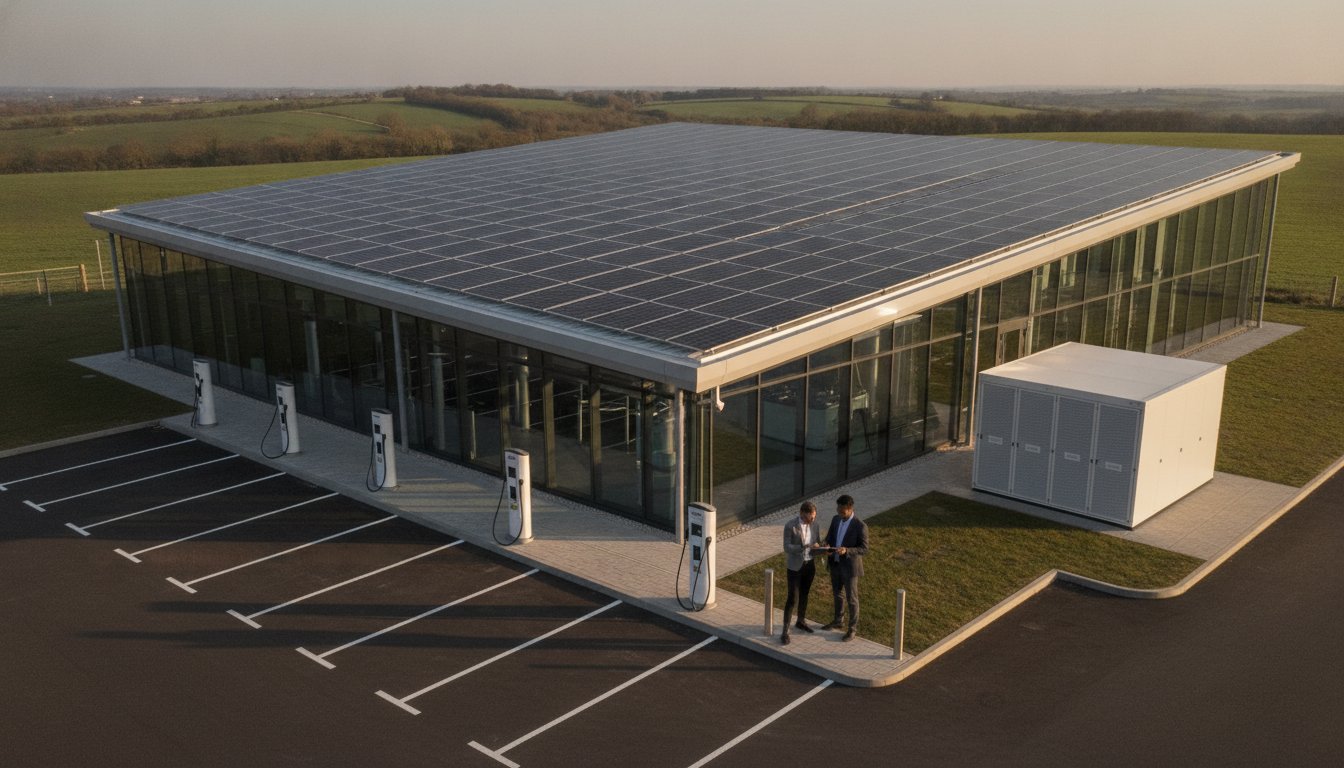
By installing a 500kW solar array paired with a 1MWh Lithium Iron Phosphate (LFP) battery storage system, the warehouse achieved a strategic workaround. The battery acts as a high-capacity buffer. It charges slowly from the grid and solar array during periods of low demand, then discharges rapidly to power the EV chargers when the fleet returns to base. This "peak shaving" approach eliminated the need for costly grid reinforcement and allowed the project to proceed without delay.
Technical Specification and Integration
The choice of LFP technology was a deliberate decision based on safety and thermal stability. These units are integrated seamlessly with the existing solar PV for commercial buildings, ensuring that every watt of generated power is either used immediately or stored for the evening charging cycle. A cloud-based energy management system provides real-time visibility. It allows the facility manager to monitor state-of-charge, discharge rates, and health metrics from a single dashboard. This level of control is essential for maintaining operational continuity in a high-pressure logistics environment. Integrating commercial solar battery storage London systems with existing renewables ensures maximum utility of every generated kilowatt.
Financial Performance and ROI
The financial results were immediate and measurable. By avoiding the six-figure grid upgrade fee, the project's initial ROI was significantly accelerated. Beyond simple savings, the system now generates revenue through Frequency Response services, where the battery helps balance the national grid in exchange for payments. The facility has seen a 45% reduction in overall grid reliance and the complete elimination of peak demand charges during "red zone" DUoS periods.
This investment also improved the building’s EPC rating. Higher energy efficiency directly correlates with increased asset value and lower insurance premiums. For organisations facing similar constraints, a tailored site survey can reveal how bespoke storage solves complex capacity issues. The result for this warehouse was clear: energy independence achieved without the wait for grid expansion.
Evaluating Battery Technologies: Peak Shaving vs. Energy Arbitrage
Selecting the appropriate technology for commercial solar battery storage London projects requires a clear understanding of your site's specific load profile. Not all battery systems are deployed for the same purpose. For most London enterprises, the primary objective is either peak shaving or energy arbitrage. Peak shaving focuses on reducing the highest points of demand to avoid expensive "red zone" DUoS charges. This is particularly effective for sites with heavy machinery or high-intensity EV charging requirements. By discharging the battery during these brief bursts of activity, you prevent your facility from exceeding its agreed capacity with UK Power Networks.
Energy arbitrage operates on a different logic. It involves charging the system when electricity is cheapest, typically overnight on off-peak tariffs, and discharging it during the day when grid prices peak. With 2026 electricity rates in the capital averaging around 24p per kWh, the price delta between night and day rates creates a significant opportunity for cost reduction. Modern systems use AI-driven software to manage these cycles automatically. These platforms analyse weather forecasts, historic usage patterns, and real-time market pricing to determine the most profitable time to charge or discharge without human intervention.
Financial Strategies for London Enterprises
The 2026 energy market remains volatile. For manufacturing hubs and data centres, "behind the meter" storage provides a vital financial buffer against this instability. These sectors require high energy density but must adhere to strict urban safety codes. LFP (Lithium Iron Phosphate) has a superior safety profile for indoor London installations compared to NMC (Nickel Manganese Cobalt), which carries a higher risk of thermal runaway. By choosing LFP, businesses ensure long-term reliability and easier compliance with London’s stringent fire safety and planning regulations. This choice prioritises longevity and stability over pure energy density, which is the correct trade-off for permanent commercial infrastructure.
UPS and Backup Capabilities
Energy security is as important as cost reduction. A bespoke battery system provides a seamless transition to emergency power during brownouts or grid failures. This Uninterruptible Power Supply (UPS) capability is essential for protecting critical telecoms and IT infrastructure from data loss or hardware damage. Reliability is guaranteed through rigorous testing and commissioning protocols. We verify every component of the emergency power sequence to ensure the system responds instantly when the grid falters. For London businesses, this enhanced energy security is a cornerstone of operational resilience, ensuring that essential services remain online regardless of external grid conditions.
Navigating Planning and Grid Capacity in Greater London
London's energy landscape is defined by its density. This makes the installation of commercial solar battery storage London systems a complex exercise in technical compliance and grid management. Unlike rural projects, urban installations must reconcile high energy demands with severe spatial and infrastructure constraints. The process begins with UK Power Networks (UKPN). For any system exceeding 50kW, a G99 grid connection application is mandatory. You should expect a standard processing time of approximately 45 working days, though complex city-centre sites often require longer periods for detailed network studies. Securing this approval early is the only way to avoid project delays or unexpected reinforcement costs.
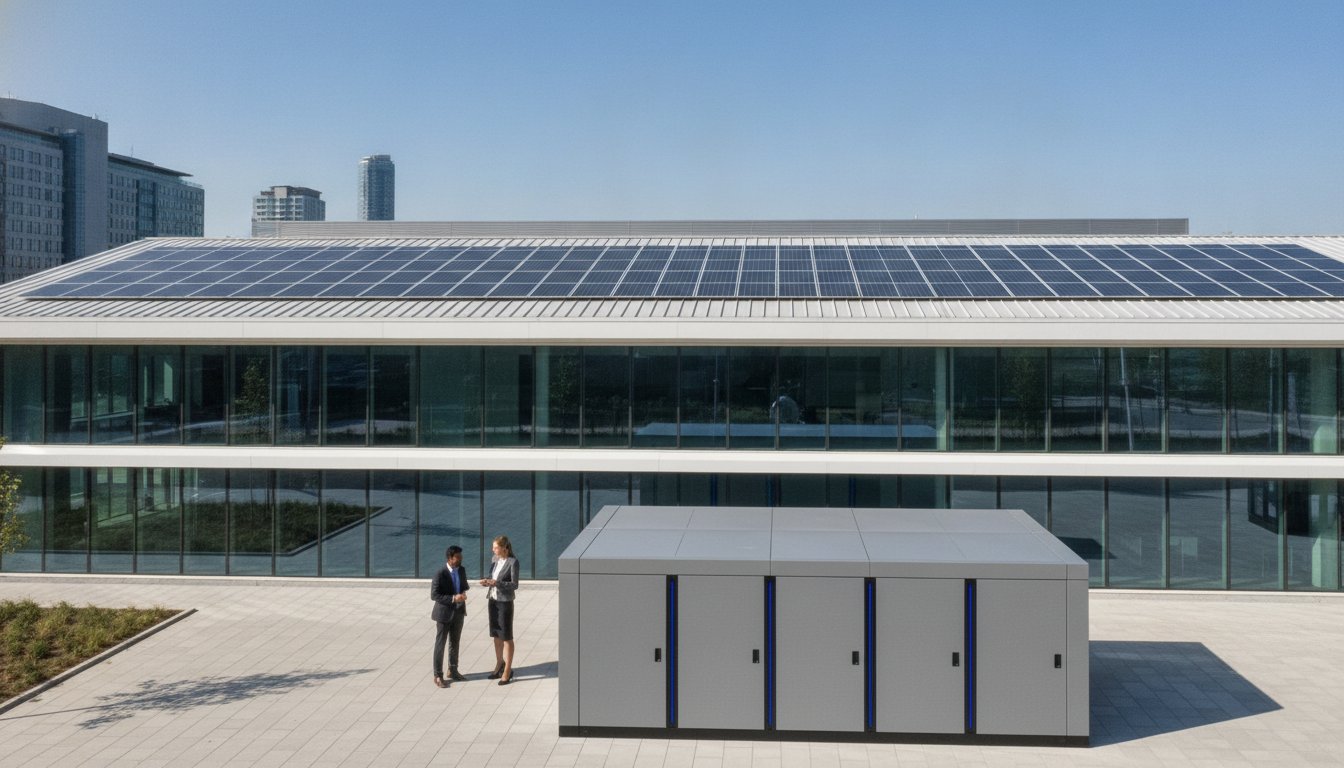
Planning departments across London boroughs maintain strict oversight on fire safety, acoustic output, and aesthetic impact. A battery system cannot simply be "placed" on a site. It must be integrated into the building's fabric or grounds with minimal disruption to the surrounding environment. For many businesses, the choice between containerised units and indoor modular racks is driven by available square footage. Containerised solutions are ideal for external service yards, whilst modular racks allow for efficient use of internal plant rooms or basements. Each configuration requires a methodical approach to ventilation and access to satisfy both building control and insurance providers.
Grid Connection Challenges
Early engagement with the Distribution Network Operator (DNO) is essential. Many London circuits operate near their thermal or voltage limits, which often results in "Zero Export" constraints. In these scenarios, the battery system must be programmed to ensure no power is back-fed into the grid. A professional electrical survey serves as the foundation for a successful application. We analyse your existing peak loads and transformer capacity to ensure the proposed commercial solar battery storage London solution remains within the safe operating parameters of the local network. This precision prevents the risk of grid instability and potential fines for non-compliance.
Safety and Fire Regulation Compliance
Safety is the cornerstone of our design philosophy. Modern installations incorporate advanced thermal management systems and automatic fire suppression as standard. These features are critical for meeting the stringent demands of London's fire regulations and securing favourable insurance terms. Our role as certified solar battery installation Hertfordshire experts ensures that every project adheres to the highest industry benchmarks. We strictly follow the BS 7671:2018+A4:2026 amendment, which becomes mandatory on 15 October 2026. This regulation introduces specific requirements for stationary battery installations, focusing on isolation, protection, and safe siting.
Maintaining these standards ensures your energy asset is both high-performing and fully compliant with the latest legal frameworks. To understand how these regulations apply to your specific facility, book a technical grid assessment with our engineering team today.
Bespoke Battery Solutions with Empire Electrical Innovations
Empire Electrical Innovations operates with a disciplined "Design, Install, Maintain" philosophy. This structured approach ensures that every commercial solar battery storage London project is built on a foundation of technical precision rather than off-the-shelf guesswork. We don't just supply hardware; we engineer systems that integrate seamlessly with your existing infrastructure. This is particularly vital for sites managing both commercial telecoms and high-demand EV charging hubs. Our local presence in Hertfordshire and London allows us to respond rapidly to site-specific challenges. We understand the local grid nuances and planning behaviours of London boroughs, ensuring your project moves from concept to commissioning without unnecessary friction.
Our engineering team focuses on the longevity of every installation. We don't believe in "fit and forget" solutions. Instead, we provide a comprehensive service that covers everything from the initial UKPN G99 application to the final testing and commissioning protocols. This end-to-end management is what defines us as a trusted specialist in the capital's complex energy market. Whether you're upgrading an existing solar array or starting a new multi-technology infrastructure project, our focus remains on delivering a system that is safe, compliant, and future-ready.
The Empire Partnership Approach
We view our clients as long-term partners rather than one-off projects. Transitioning from a technical contractor to an energy partner means providing the ongoing support required to protect your investment for decades. As GivEnergy certified installers, we maintain the highest industry standards for every installation. Performance monitoring is a core part of this service. We track your system's efficiency in real-time to ensure it continues to deliver the maximum possible ROI. This methodical oversight ensures your facility remains compliant with evolving safety standards whilst consistently hitting its energy reduction targets. Reliability isn't a promise; it's a built-in feature of our workmanship.
Securing Your Energy Future in 2026
The window for securing London’s remaining grid capacity is narrowing. As more businesses electrify their operations, the competition for connection space with UK Power Networks will only intensify. Acting now allows you to lock in your energy independence before local infrastructure reaches its absolute limit. A tailored energy audit is the first step toward decoupling your business from grid volatility. We provide free site surveys and detailed quotations that account for your unique operational requirements and building constraints. Our expertise in commercial telecoms infrastructure and fibre blowing provides us with a unique perspective on the power needs of modern digital businesses.
We understand that energy security is the lifeblood of your operation. By choosing a specialist with deep roots in London’s technical infrastructure, you ensure your project is delivered with quiet authority and technical excellence. Our team is ready to guide you through the complexities of commercial solar battery storage London from initial design to final commissioning. It's time to take control of your energy overheads and secure your facility's future.
Enquire about your commercial battery storage project today to begin your transition to a more resilient, cost-effective energy future.
Securing Your Competitive Edge in London's Energy Market
London's commercial landscape is evolving. Energy is no longer just a utility; it's a strategic asset that requires methodical management. By implementing commercial solar battery storage London businesses can finally decouple their growth from grid limitations and volatile pricing. We've seen how bespoke systems solve the complex puzzle of limited capacity and strict urban regulations whilst delivering a measurable return on investment.
Success depends on precision. From navigating UKPN G99 applications to ensuring compliance with the latest fire safety standards, every technical detail matters. As GivEnergy certified installers, we specialise in managing these London grid constraints through end-to-end project management. We don't just install hardware; we build resilient infrastructure that supports your long-term Net Zero goals and operational security.
The window to secure your site's energy future is open. It's time to move from passive consumption to active production and storage. Book a Professional Commercial Solar Survey today to begin your journey toward energy independence.
Frequently Asked Questions
Do I need planning permission for commercial battery storage in London?
Standalone battery energy storage systems (BESS) require planning permission in England regardless of their capacity. However, systems installed as ancillary equipment to an existing rooftop solar array often fall under permitted development rights. In London, you must check with your borough's planning department if your building is listed or located in a conservation area. We recommend a professional assessment to ensure your specific installation complies with local urban planning constraints.
How long does a commercial solar battery system last?
A high-quality commercial battery system typically lasts between 10 and 15 years. This longevity depends on the battery chemistry and how many charge-discharge cycles the system performs daily. Lithium Iron Phosphate (LFP) cells are favoured for their durability and can often reach 6,000 to 10,000 cycles before significant degradation occurs. Regular maintenance and software-driven thermal management are essential to maximise the lifespan of your energy asset.
Can battery storage help my London business avoid grid upgrade costs?
Yes, battery storage is an effective way to bypass expensive grid reinforcement fees. By using the battery to "buffer" high-demand loads, such as rapid EV chargers or heavy machinery, you avoid drawing excessive power directly from the grid. This peak shaving strategy prevents you from exceeding your agreed supply capacity. It allows your business to expand its operations without waiting for UK Power Networks to perform costly substation upgrades.
What is the typical ROI for commercial battery storage in the UK?
The typical payback period for integrated solar and storage systems in the UK ranges from five to eight years. For a 100 kWp solar system, the annual ROI is often between 14% and 25% depending on your site's load profile. These returns are driven by avoided peak DUoS charges and revenue from grid balancing services. By installing commercial solar battery storage London businesses can protect themselves against electricity rates that currently average near 24p per kWh.
Is battery storage safe for indoor installation in office buildings?
Battery storage is safe for indoor installation provided it meets the latest electrical and fire safety standards. We utilise LFP technology, which is inherently more stable than other chemistries and significantly reduces the risk of thermal runaway. Every indoor installation must comply with the BS 7671:2018+A4:2026 wiring regulations. We include automatic fire suppression and advanced ventilation systems to ensure the safety of your staff and critical IT infrastructure.
How much space does a 100kWh commercial battery system require?
A 100kWh commercial battery system is surprisingly compact and usually requires approximately 1.5 to 2 square metres of floor space. Modern modular racks are designed to fit into existing plant rooms or basements. If internal space is unavailable, we can provide weatherproof, containerised units for external siting in service yards. The exact footprint depends on the cooling requirements and the specific configuration of the battery modules selected for your site.
Can I add battery storage to an existing commercial solar PV system?
You can certainly add battery storage to an existing commercial solar PV system. This is achieved through "AC-coupling," where the battery is integrated into your building's electrical network via a separate dedicated inverter. This approach allows you to capture excess solar energy that would otherwise be exported to the grid at low rates. Retrofitting is a methodical way to enhance your energy independence without replacing your current solar infrastructure.
What is a G99 application and why does my business need one?
A G99 application is a formal request to UK Power Networks for permission to connect a generation or storage system larger than 50kW to the grid. It ensures that your commercial solar battery storage London installation won't cause instability or voltage issues on the local network. This is a mandatory legal requirement for larger systems. We manage this entire technical process on your behalf to secure the necessary approvals for your project.
Comments