
Commercial Solar Panel Installation Bedfordshire: The 2026 Strategic Business Guide

By the end of 2026, a commercial rooftop in Bedfordshire without solar PV will be viewed as a financial liability rather than a missed opportunity. You've likely watched your energy tariffs climb whilst trying to decode the complexities of a commercial solar panel installation Bedfordshire project under the latest Part L Building Regulations. It's a common frustration. Managing rising operational costs is difficult enough without the added pressure of integrating EV charging and battery storage into existing infrastructure. We understand the need for precision, compliance, and long-term value.
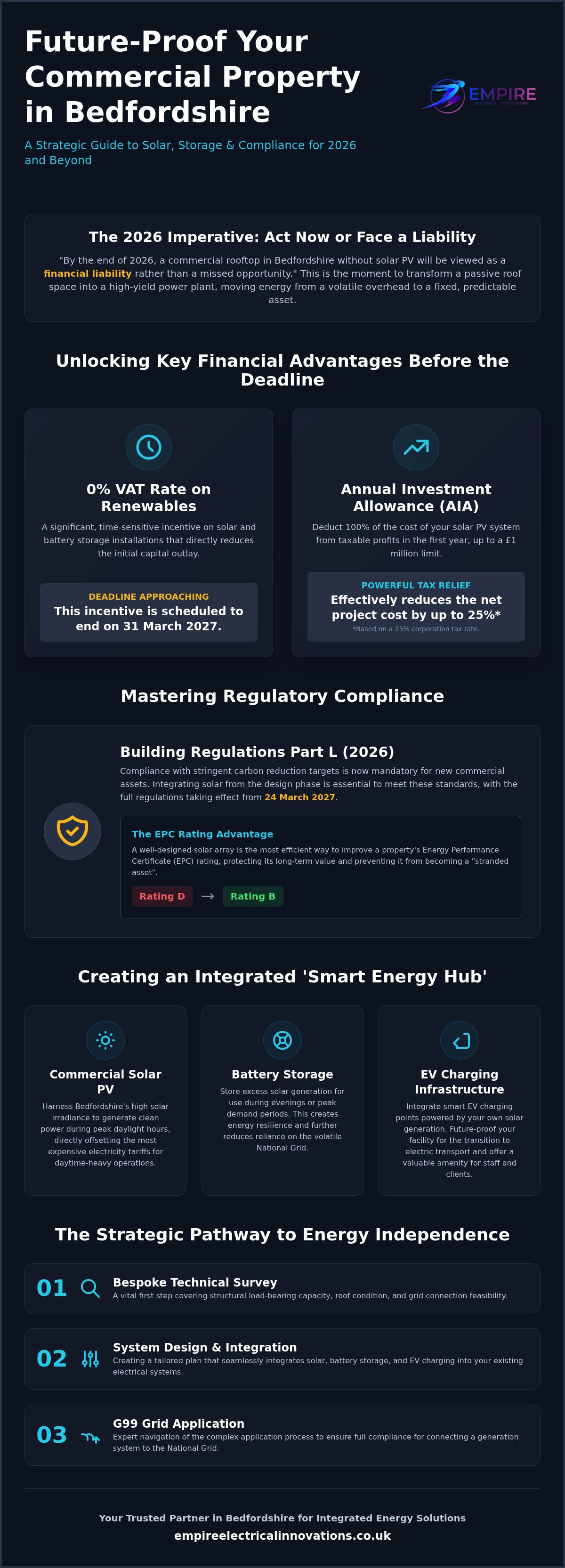
This guide provides the strategic clarity required to transform these regulatory hurdles into a distinct competitive advantage. You'll discover how to leverage the 0% VAT rate and the £1 million Annual Investment Allowance to secure your margins before the 2027 deadline. We'll preview the essential steps for future-proofing your site, from navigating G99 grid applications to achieving seamless integration with your wider electrical systems. This is about building a resilient, compliant, and energy-independent future for your business.
Table of Contents
The Economic Case for Commercial Solar Panel Installation in Bedfordshire
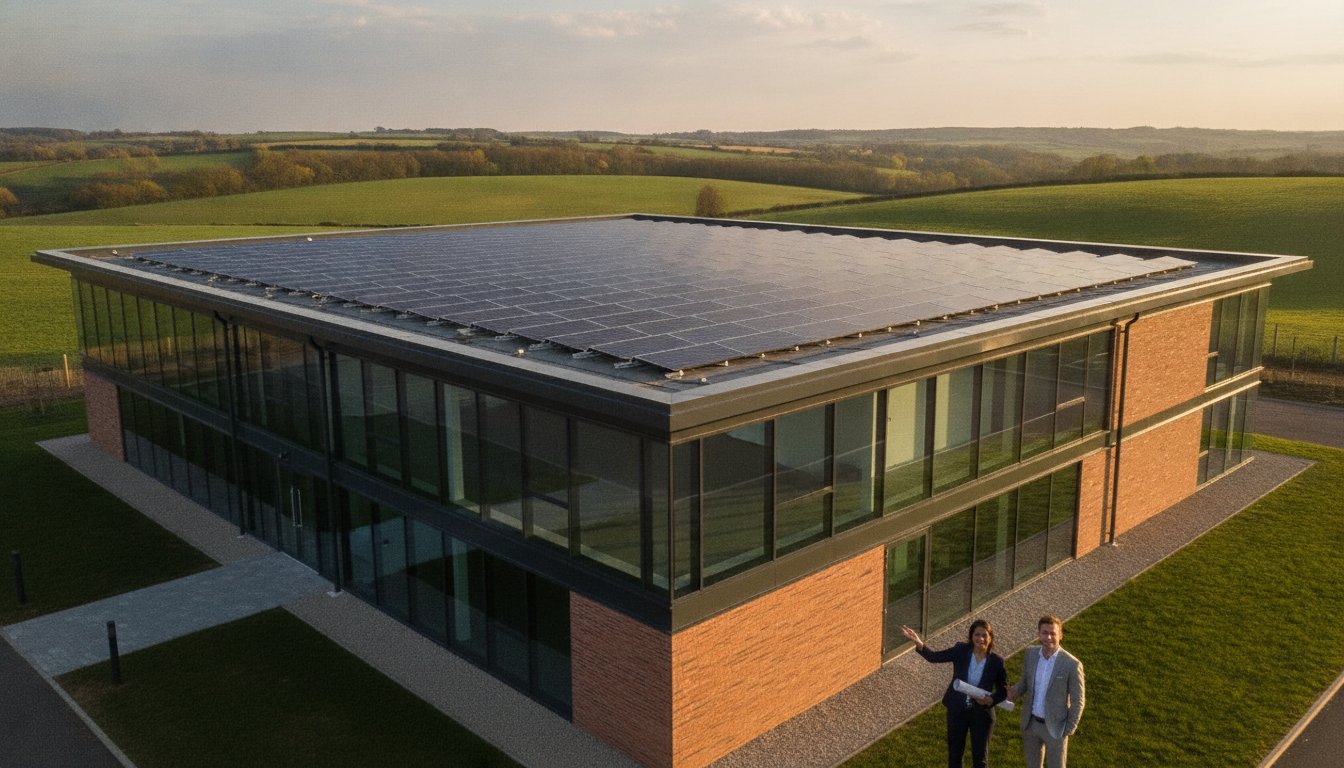
Energy security is now a primary boardroom concern for Bedfordshire firms. In 2026, electricity price volatility in the South East continues to challenge operational margins, making on-site generation a necessity rather than a luxury. A commercial solar panel installation Bedfordshire project transforms a passive roof space into a high-yield power plant. This shift moves energy from a variable overhead to a fixed, predictable asset. Local businesses are increasingly using solar panel technology to insulate themselves against the fluctuations of the National Grid, which remains strained by the ongoing transition to electrified heating and transport.
Bedfordshire occupies a prime geographic position for solar harvesting. Its location in the East of England provides some of the highest solar irradiance levels in the UK. This is particularly advantageous for the region's vast logistics and distribution sector. Large-scale warehouse roofs provide the ideal surface area for high-efficiency PV arrays, allowing firms to meet ambitious Net Zero targets whilst satisfying the ESG (Environmental, Social, and Governance) requirements of global supply chain partners.
Reducing Operational Expenditure in Business Parks
Industrial hubs such as Bedford Link and Wixams Business Park are seeing a rapid uptake in solar integration. These sites often house "daytime-heavy" operations, including cold storage, automated manufacturing, and large-scale server rooms. Solar PV is most effective when the generation profile matches the consumption profile. By generating power during peak daylight hours, businesses can offset the most expensive units of electricity. This direct self-consumption provides an immediate shield against commercial energy tariffs that have remained stubbornly high throughout 2026. In 2026, commercial Solar ROI is defined as the accelerated point where cumulative energy savings and tax capital allowances exceed the total cost of system design, installation, and commissioning.
Commercial Incentives and Capital Allowances
The financial landscape for 2026 remains highly supportive of renewable energy investment. Businesses can currently benefit from the 0% VAT rate on solar and battery storage installations, a crucial incentive that is scheduled to end on 31 March 2027. This provides a clear window for Bedfordshire firms to act now. Additionally, the Annual Investment Allowance (AIA) remains a powerful tool. It allows companies to deduct 100% of the cost of qualifying plant and machinery, including solar PV systems, from their taxable profits in the first year, up to a limit of £1 million. At a 25% corporation tax rate, this effectively reduces the net project cost by a quarter. Local sustainability funding and regional grants occasionally supplement these national schemes, making the "payback period" more attractive than ever for disciplined financial directors.
Navigating 2026 Building Regulations and Part L Compliance
Compliance is the foundation of any modern development. For Bedfordshire developers, Part L of the Building Regulations is no longer a secondary consideration. It's a mandatory framework that dictates the carbon performance of every new commercial asset. By integrating a commercial solar panel installation Bedfordshire project from the design phase, firms can meet the stringent carbon reduction targets mandated by the 2026 updates. These regulations, part of the broader Future Homes Standard, require a significant shift away from fossil fuels. The full weight of these standards will be felt from 24 March 2027, but the planning cycle for compliant buildings starts now. Precision is essential.
Future-proofing your building today protects its value tomorrow. The UK government has signaled a trajectory toward even tighter 2030 energy efficiency standards. Commercial buildings that fail to adapt risk becoming "stranded assets" that are difficult to let or sell. By exceeding current minimums, you insulate your business against future legislative shifts. High standards are non-negotiable.
The Role of Solar in EPC Rating Improvements
Solar PV is the most efficient way to lift a property's Energy Performance Certificate (EPC) rating. A jump from Grade D to Grade B is common with a well-designed array. This improvement directly impacts commercial lease values and bank financing. Many institutional lenders now offer "green loans" with preferential rates for buildings that demonstrate superior energy performance. Blue-chip tenants also prioritise Grade A or B buildings to satisfy their own corporate sustainability mandates. For a deeper dive into these requirements, see our guide on Part L Building Regulations and Solar Panels. Improved ratings drive revenue.
Compliance Beyond the Panels: Safety and Infrastructure
Safety and grid compatibility are paramount. For systems exceeding 50kW, a G99 grid connection application is mandatory. This involves complex coordination with the Distribution Network Operator (DNO). Professional commissioning ensures the system is fire-safe and compliant with BS 7671 electrical standards. We focus on every detail. MCS certification acts as the ultimate verification of quality. It ensures your installation is eligible for the Smart Export Guarantee (SEG), allowing you to sell surplus energy back to the grid at rates typically between 7p and 15p per kWh. Rigorous testing is standard. If you're planning a new build, consider a bespoke technical survey to ensure your infrastructure is ready for the transition.
Strategic Integration: Battery Storage and EV Charging Infrastructure
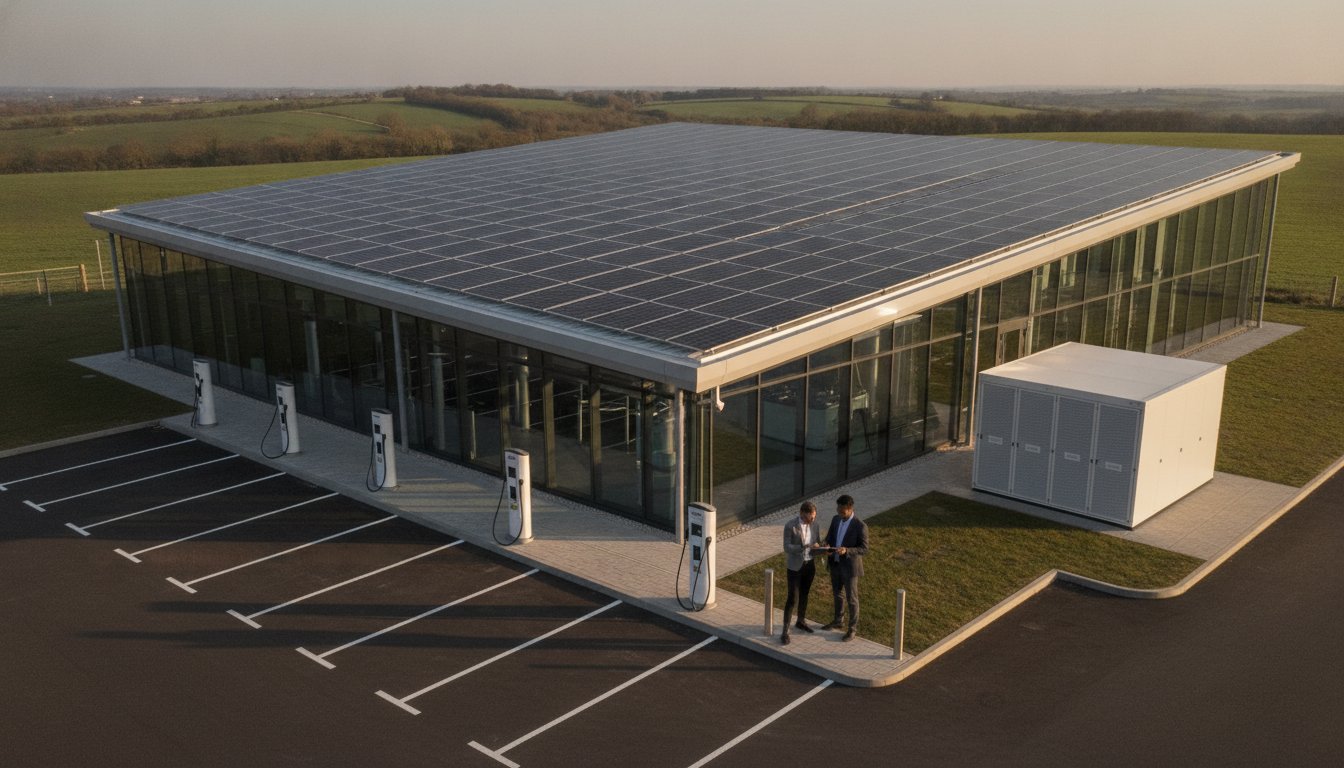
Modern energy management has evolved beyond simple generation. In 2026, leading Bedfordshire enterprises are transitioning from standalone solar arrays to integrated "Smart Energy Hubs." This holistic approach combines a commercial solar panel installation Bedfordshire with advanced storage and charging technologies. By synchronising these systems, businesses can maximise self-consumption and drastically reduce their reliance on the National Grid. It's a move that transforms a building into a self-sustaining power centre, capable of managing its own demand and supply in real-time.
The synergy between solar PV and battery storage is particularly vital for managing peak-time commercial energy tariffs. Without storage, surplus energy generated during the sunniest hours is often exported to the grid for a lower return. Integrating a battery allows you to capture this clean energy and deploy it when grid prices are at their highest, typically during the early evening peak. This "load shifting" strategy ensures that every kilowatt-hour generated on your roof delivers the maximum possible financial value to your bottom line.
Industrial Battery Storage for Business Continuity
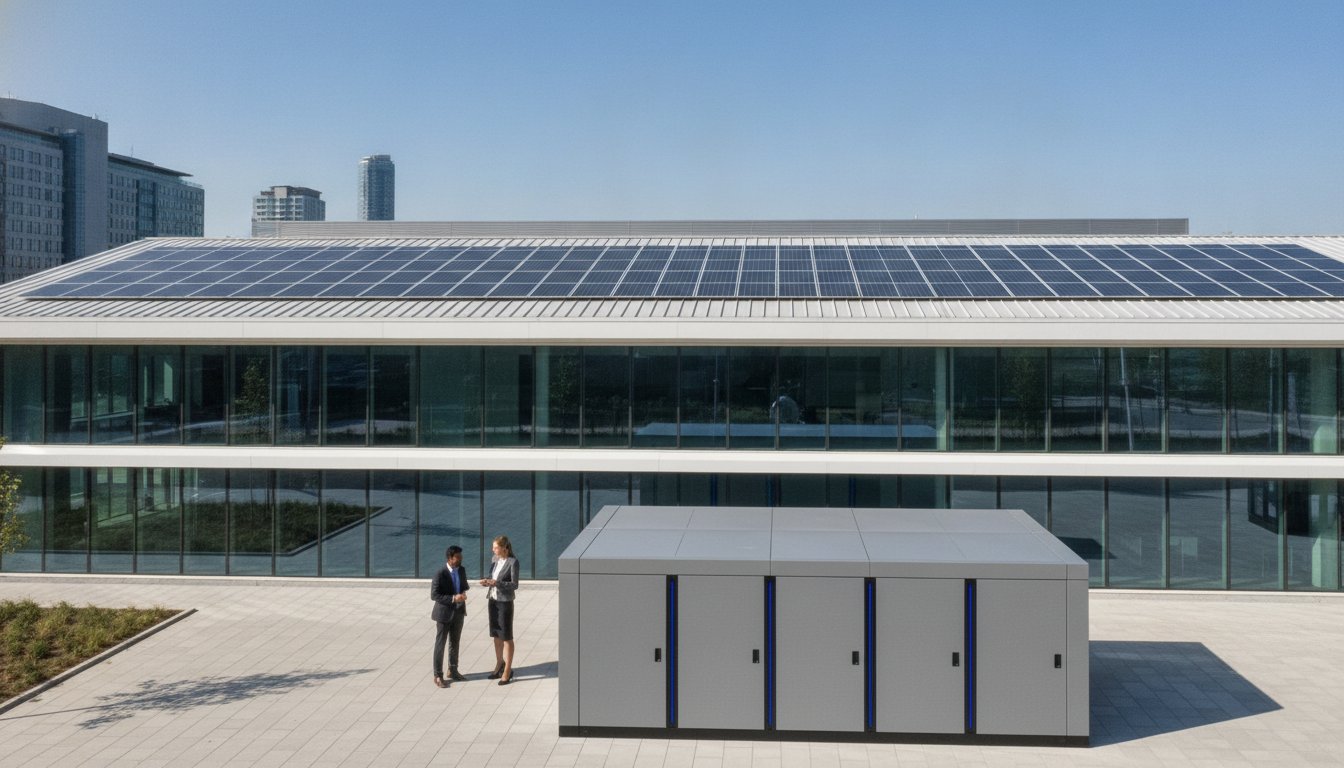
Reliability is a core requirement for industrial operations. For businesses in sectors like manufacturing or telecoms, even minor grid fluctuations can cause costly downtime. High-capacity battery systems act as a buffer, providing a stabilised power supply and protecting sensitive equipment. When planning your infrastructure, maximising efficiency with solar battery installation requires a precise calculation of your base load. Whilst a warehouse might require significant capacity for 24/7 refrigeration, an office environment might prioritise peak-shaving to lower costs. All designs must align with the technical standards outlined in the UK Building Regulations Part L to ensure long-term compliance and safety.
Future-Proofing for EV Fleet Transition
The transition to electric transport is accelerating. Integrating commercial EV charger installation with your solar array is the most cost-effective way to power a corporate fleet. By using on-site renewable energy, you eliminate the fuel costs associated with traditional vehicles whilst meeting corporate ESG targets. However, adding multiple chargers significantly increases the load on your commercial electrical supply. We employ smart charging strategies to balance this demand. These systems can prioritise charging when solar generation is at its peak or when battery reserves are full, ensuring your vehicles are powered by 100% renewable energy without overstretching your local grid connection. With grants of up to £14,000 available through the Workplace Charging Scheme in 2026, the financial case for this integration is indisputable.
The Commercial Installation Process: From Survey to Commissioning
Execution is where strategy meets reality. A successful commercial solar panel installation Bedfordshire project relies on more than just high-quality components; it requires a disciplined, multi-stage execution plan. We approach every project with a methodical focus on technical precision and minimal operational disruption. From the initial feasibility study to the final commissioning, each phase is designed to ensure the long-term reliability of your energy infrastructure. High standards are the baseline for every installation we undertake.
Managing the logistical complexities of a commercial site requires expert coordination. This includes navigating local planning requirements in Bedfordshire and ensuring all structural assessments are verified by qualified engineers. Whilst many rooftop systems fall under permitted development rights, we ensure every detail is documented and compliant with local authority expectations. Our goal is to provide a seamless transition to renewable energy without compromising your daily business operations.
Phase 1: Technical Survey and Feasibility Study
Precision begins with data. We evaluate roof orientation, potential shading from nearby structures, and the underlying structural integrity of the building. This is especially critical for older industrial units in Bedfordshire that may require specific mounting solutions to distribute weight effectively. We also analyse historical half-hourly meter data to size the system correctly, ensuring the array matches your actual consumption profile rather than an estimated average. A comprehensive commercial solar survey typically takes between three and five hours to complete, depending on the complexity of the roof structure and electrical infrastructure. Accurate sizing prevents over-investment and maximises your eventual ROI.
Phase 2: Project Design and Grid Application
The design phase translates survey data into a high-performance electrical schematic. For systems exceeding 50kW, securing G99 approval from the Distribution Network Operator (DNO) is a mandatory and often complex step. We manage this entire application process, coordinating with the DNO to ensure your system is granted permission to connect to the grid. Our designs include bespoke racking and cabling layouts that prioritise both energy yield and ease of future maintenance. Because we are specialists in commercial telecoms infrastructure, we can seamlessly integrate your solar monitoring systems with existing building management or communications networks. This creates a unified view of your site's performance.
Once the design is finalised, the physical installation is scheduled to align with your business's quietest periods. We utilise advanced project management techniques to keep on-site time to a minimum, ensuring that your staff and visitors are unaffected. Following the physical build, we conduct rigorous testing and commissioning to verify that the system meets all safety and performance standards. To begin this process for your facility, you can book a bespoke technical survey with our specialist team today.
Why Empire Electrical Innovations is Bedfordshire’s Trusted Partner
Selecting the right delivery partner for a commercial solar panel installation Bedfordshire project is a decision that impacts your operational resilience for decades. Empire Electrical Innovations operates as a Trusted Specialist. We distinguish ourselves by treating renewable energy not as a standalone product, but as a core component of your building's technical infrastructure. Our team brings a methodical, disciplined approach to every site, ensuring that every installation is grounded in 2026 regulatory compliance and superior workmanship. We value clear communication over empty marketing promises.
Our status as an MCS Certified installer provides the baseline for our quality standards. This certification is essential for businesses looking to access the Smart Export Guarantee (SEG) and ensures that all components, from high-efficiency PV modules to sophisticated inverters, meet rigorous industry benchmarks. We understand the unique commercial landscape of Bedfordshire, from the expansive distribution centres near the M1 to the specialist manufacturing hubs in Sandy and Biggleswade. This local knowledge allows us to design bespoke systems that account for specific roof profiles and regional grid capacities.
Specialist Infrastructure Expertise
We provide a multi-disciplinary advantage that standard solar firms cannot match. Because we are experts in commercial telecoms and electrical infrastructure, we approach cable management and system integration with a higher level of precision. Our extensive experience as telecoms ducting contractors ensures that the complex wiring required for large-scale solar arrays, battery banks, and EV chargers is handled with professional care. This prevents the "cluttered" installations often seen with less experienced providers. We adopt a partnership-first approach, offering local Bedfordshire-based support for rapid maintenance and long-term system optimisation. Your project is an investment in future-readiness, and we treat it with the appropriate technical gravity.
Get Started with a Professional Solar Survey
The transition to energy independence begins with accurate data. Securing your firm’s energy future requires a comprehensive understanding of your site's specific potential. During our initial consultation, we focus on your strategic goals, whether that involves meeting Part L compliance, reducing peak-time tariffs, or electrifying your commercial fleet. We don't believe in generic estimates. Every quotation we provide is based on a detailed technical survey of your premises. You can expect a transparent breakdown of the following:
A full structural and electrical feasibility assessment of your rooftop.
Detailed analysis of your energy consumption patterns to ensure optimal system sizing.
Clear projections for carbon reduction and financial return based on 2026 tax allowances.
A bespoke integration plan for battery storage and EV charging infrastructure.
Taking the first step is straightforward. Our specialist team is ready to guide you through the complexities of grid applications and system design. Organise your professional commercial solar survey today to begin transforming your Bedfordshire facility into a high-performance energy hub.
Future-Proof Your Bedfordshire Business Today
The transition to on-site renewable generation is a strategic necessity for the region's commercial sector. By aligning your infrastructure with the 2026 Part L Building Regulations now, you avoid the risk of future non-compliance whilst securing significant capital allowances. A professionally managed commercial solar panel installation Bedfordshire project provides more than just lower energy bills. It delivers long-term operational resilience through the integration of battery storage and EV charging, transforming your facility into a self-sustaining energy hub.
As MCS Certified Installers, we specialise in bespoke design for industrial and commercial buildings. We ensure your project meets the highest technical standards from the initial survey through to final commissioning. Our expertise in 2026 Part L compliance means your investment is protected against evolving energy standards. Don't leave your energy strategy to chance. Book a bespoke commercial solar survey for your Bedfordshire business today to establish a clear path toward energy independence. We're ready to help you build a more resilient future.
Frequently Asked Questions
Do I need planning permission for commercial solar panels in Bedfordshire?
Most commercial solar installations in Bedfordshire fall under permitted development rights. This means you don't usually require full planning permission provided the panels don't protrude more than 200mm from the roof surface. However, exceptions apply to listed buildings or properties within conservation areas. We recommend a professional assessment to ensure your site meets these specific criteria before any work begins on your facility.
How long is the typical ROI for a commercial solar installation in 2026?
The typical return on investment varies based on system size and energy usage patterns. In 2026, the 100% Annual Investment Allowance and 0% VAT rate significantly accelerate the payback period for a commercial solar panel installation Bedfordshire project. Most businesses see a full return within three to six years. This is driven by high self-consumption rates and the avoidance of volatile commercial energy tariffs.
Can solar panels power my entire Bedfordshire warehouse or factory?
Solar PV can offset a substantial portion of your energy load, though powering a high-intensity factory entirely often requires integrated battery storage. Large warehouse roofs are ideal for generating significant power during daylight hours. By matching your generation to your peak operational times, you can drastically reduce your grid dependency. We use half-hourly meter data to design systems that maximise your site's self-sufficiency.
What maintenance is required for a large-scale commercial solar array?
Commercial solar arrays are generally low maintenance but require periodic professional attention to ensure peak performance. We recommend annual electrical testing and an inspection of the mounting infrastructure to maintain safety standards. Regular cleaning is also vital, especially for sites near industrial areas where debris can reduce panel efficiency. Proactive monitoring identifies technical issues before they impact your long-term financial returns.
How does the 2026 Part L Building Regulation affect my solar installation?
The 2026 update to Building Regulations Part L mandates stricter carbon reduction targets for all new non-dwellings. It requires developers to integrate low-carbon technology, such as solar PV, from the initial design phase to meet energy efficiency standards. This shift ensures buildings are future-proofed against upcoming 2030 requirements. Compliance is now a core requirement for securing building control approval and maintaining the market value of your property.
Is my commercial roof suitable for solar PV panels?
Most commercial roofs are suitable, but we must verify the structural integrity and orientation during a technical survey. Trapezoidal metal roofs are particularly efficient for mounting, whilst flat roofs require ballasted systems to ensure stability without penetrating the roof membrane. Our assessment checks the load-bearing capacity to ensure the structure can handle the weight of the panels. We also identify any shading issues that could hinder energy generation.
Can I integrate battery storage with an existing commercial solar system?
Yes, battery storage can be retrofitted to almost any existing commercial solar panel installation Bedfordshire. We typically use AC-coupled storage solutions that integrate seamlessly with your current electrical infrastructure. This allows you to capture surplus energy generated during the day and deploy it during peak-tariff periods. It's an effective way to enhance the value of an older installation whilst improving your site's overall energy resilience and continuity.
What happens to the excess energy my commercial solar panels produce?
Excess energy can either be stored in a battery for later use or exported back to the National Grid. Under the Smart Export Guarantee (SEG), businesses with MCS certified installations can receive payments for every kilowatt-hour they export. Rates in 2026 typically range between 7p and 15p per kWh. However, prioritising on-site storage usually offers a better financial return than exporting at lower rates, as it avoids the cost of buying expensive grid power later.
Comments