
Expert Home Battery Storage Bedfordshire: The 2026 Buyer’s Guide

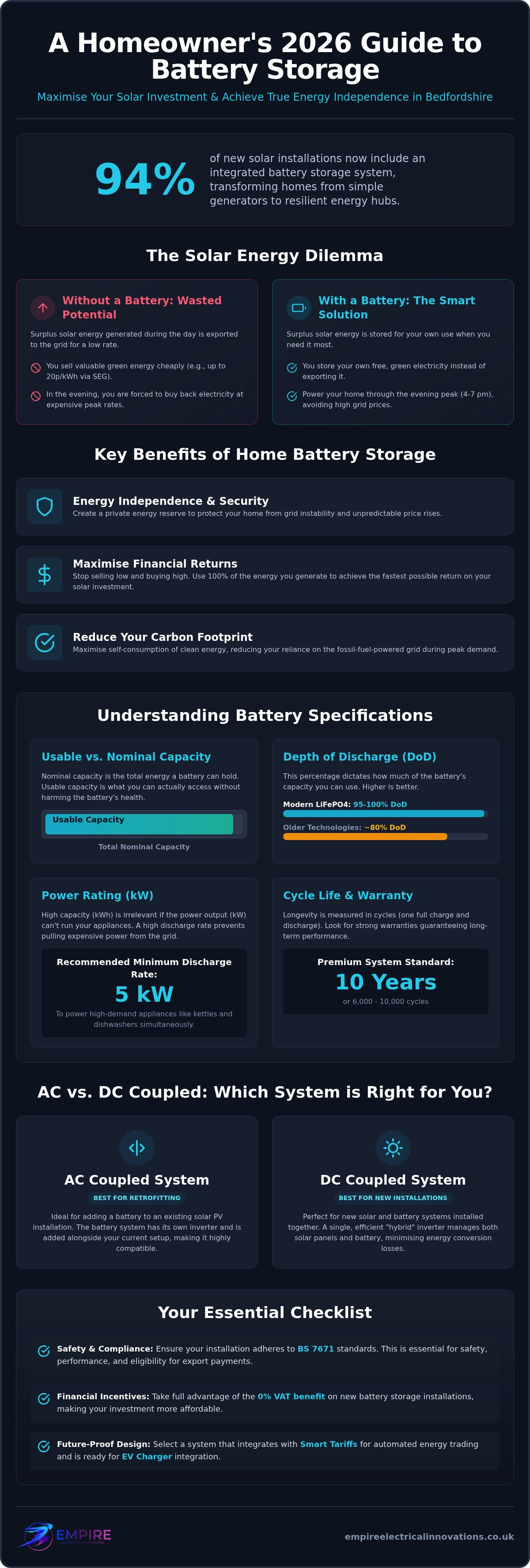
94% of new solar installations now include an integrated storage system. For those investing in home battery storage Bedfordshire, this shift reflects a new reality in domestic energy management. It's no longer sufficient to merely generate green power; you must be able to retain it. Many homeowners find that despite their solar panels, monthly bills remain stubbornly high because their surplus energy is diverted back to the grid during peak production hours.
We understand the frustration of complex technical jargon and the anxiety caused by rising grid instability. You deserve a system that provides both security and measurable financial returns. This 2026 guide outlines how to select the ideal energy storage setup to maximise your solar ROI and achieve true energy independence. We'll detail the latest BS 7671 safety regulations, 0% VAT benefits, and the way bespoke design ensures your home is ready for the next generation of smart tariffs.
Table of Contents
The Case for Home Battery Storage in Bedfordshire
Modern energy management has evolved far beyond simply fitting solar panels and hoping for the best. In 2026, a battery energy storage system functions as a sophisticated, strategic energy management tool. It allows you to decouple the moment of energy generation from the moment of consumption. For many, this means the difference between wasting green energy and achieving a high level of self-sufficiency. High-performance batteries capture surplus power during the day, ensuring your household runs on clean energy long after the sun has set.
Bedfordshire presents a unique case for this technology. The region has one of the highest densities of domestic solar PV in the UK, yet local grid infrastructure often faces constraints during peak generation periods. By investing in home battery storage Bedfordshire residents can alleviate pressure on the local network whilst ensuring their own power supply remains stable. We've moved away from the basic "store and use" models of the past decade. Today, these systems allow for active grid participation, including automated trading on smart tariffs to optimise your financial return.
The financial argument has shifted significantly. Whilst the Smart Export Guarantee (SEG) offers rates up to 20p per kWh, the cost of importing electricity during peak hours remains substantially higher. A battery system closes this gap. Instead of exporting your valuable energy for a lower rate and buying it back at a premium, you retain every kilowatt for your own use.
Energy Independence Amongst Rising Costs
Volatility remains a defining characteristic of the UK energy market. A private energy reserve provides a critical buffer against this unpredictability. By storing energy when it is cheapest, either from your panels or via off-peak grid charging, you effectively insulate your home from the steep price hikes typically seen between 4:00 pm and 7:00 pm. In the 2026 energy market, true energy independence is the ability to bypass peak-time grid pricing by utilising stored, self-generated power. This approach transforms your home from a passive consumer into an active, resilient energy hub.
Environmental Impact and Carbon Reduction
Maximising your solar ROI also yields significant environmental dividends. Every kilowatt-hour of stored solar power you use is a kilowatt-hour you don't have to pull from the National Grid, which still relies on fossil fuels during periods of high demand. By reducing the carbon intensity of your home, you contribute directly to local sustainability targets across Bedfordshire. These systems ensure that your commitment to green energy is fully realised, preventing the "carbon leakage" that occurs when renewable energy is wasted due to a lack of storage capacity.
Evaluating Battery Capacity and Performance Metrics
Selecting the right hardware for home battery storage Bedfordshire requires looking beyond headline capacity figures. It's easy to be misled by "total capacity" when the figure that truly dictates your energy independence is the "usable capacity". Understanding these technical nuances ensures your investment delivers the expected performance over its entire lifespan.
Usable Capacity vs Nominal Capacity
Nominal capacity refers to the total energy a battery can hold. However, modern systems are designed to retain a small amount of charge to protect the cell chemistry. This means you cannot use 100% of the energy stored without risking permanent damage. Lithium Iron Phosphate (LiFePO4) batteries, the dominant technology in 2026, typically offer a Depth of Discharge (DoD) of 95% to 100%. This is significantly higher than older lead-acid or standard lithium-ion alternatives which often required a 20% reserve. For a typical Bedfordshire household consuming between 8-12kWh per day, we recommend sizing the usable capacity to cover your average evening and overnight demand plus a small buffer for low-generation days.
Power ratings are equally critical. A battery with 10kWh of storage is of little use if it can only discharge at 2kW whilst you're trying to run a 3kW kettle and a dishwasher simultaneously. High-demand appliances require a system with a discharge rate of at least 5kW to avoid pulling expensive top-up power from the grid. A well-designed system balances storage volume with discharge capability to ensure you remain off-grid during your busiest hours.
Cycle Life and Warranty Standards
Longevity is measured in cycles, not just years. A single cycle represents one full charge and discharge. Most premium systems now offer a 10-year warranty that guarantees a specific percentage of capacity after 6,000 to 10,000 cycles. Performance is often influenced by environmental factors; therefore, 2026 systems incorporate advanced temperature control to preserve cell health during colder winters. According to a recent government safety review, the integration of these sophisticated management systems is vital for domestic reliability.
If you're looking for high-performance examples of this technology, our work as GivEnergy battery installers Hertfordshire demonstrates how modular systems can scale alongside your energy needs. This modularity allows you to start with a smaller unit and add capacity as your household grows or you transition to electric heating. Getting these metrics right is the foundation of a reliable system, and we often suggest a bespoke energy assessment to ensure your hardware choice matches your specific consumption profile accurately.
AC vs DC Coupled Systems: Finding the Right Fit
Choosing the right configuration for home battery storage Bedfordshire depends primarily on whether you're starting from scratch or upgrading an existing array. The way your battery connects to your solar panels dictates the overall efficiency and complexity of the installation. In 2026, the industry has shifted toward high-efficiency hybrid inverters, but the choice between AC and DC coupling remains a pivotal decision for every homeowner.
DC (Direct Current) coupled systems are the gold standard for new installations. In this setup, the solar panels and the battery share a single hybrid inverter. This eliminates the need for multiple energy conversions. Every time electricity converts from DC to AC and back again, you lose a small percentage of that energy. By keeping the flow in DC until it’s needed for the home, you maximise efficiency and simplify the overall system architecture. This streamlined approach often results in a more compact installation and lower long-term maintenance requirements.
AC (Alternating Current) coupled systems offer greater flexibility for established properties. These systems sit independently of your existing solar inverter. Whilst this involves an extra conversion step, it's often the most cost-effective way to implement home battery storage Bedfordshire without replacing perfectly functional solar hardware. This modularity allows the storage system to be placed in a different location from the solar inverter, which is helpful if space is limited.
Retrofitting Storage to Existing Solar PV
Retrofitting is a major trend in Bedfordshire as homeowners seek to improve systems installed in the early 2020s. AC coupling integrates seamlessly with any existing solar inverter, requiring minimal changes to your current wiring. This approach reduces installation time and avoids the need to disturb your roof-mounted equipment. We follow the latest fire safety installation standards to ensure every retrofit is compliant and secure. For a deeper look at how we manage these upgrades, our guide on solar battery installation Hertfordshire provides a detailed breakdown of the retrofit strategy.
Smart Tariffs and Virtual Power Plants
A modern battery is more than a storage tank; it's a strategic trading platform. By 2026, smart tariffs like Octopus Agile have become essential for maximising ROI. These tariffs provide half-hourly pricing that can even turn negative during periods of high wind generation. Our systems are designed to "force-charge" from the grid during these cheap windows, regardless of the weather. You can then discharge that stored power during peak "Saving Sessions" to earn export credits. This active management ensures your battery works for you 24 hours a day, not just when the sun shines.
Choosing Certified Battery Installers in Bedfordshire
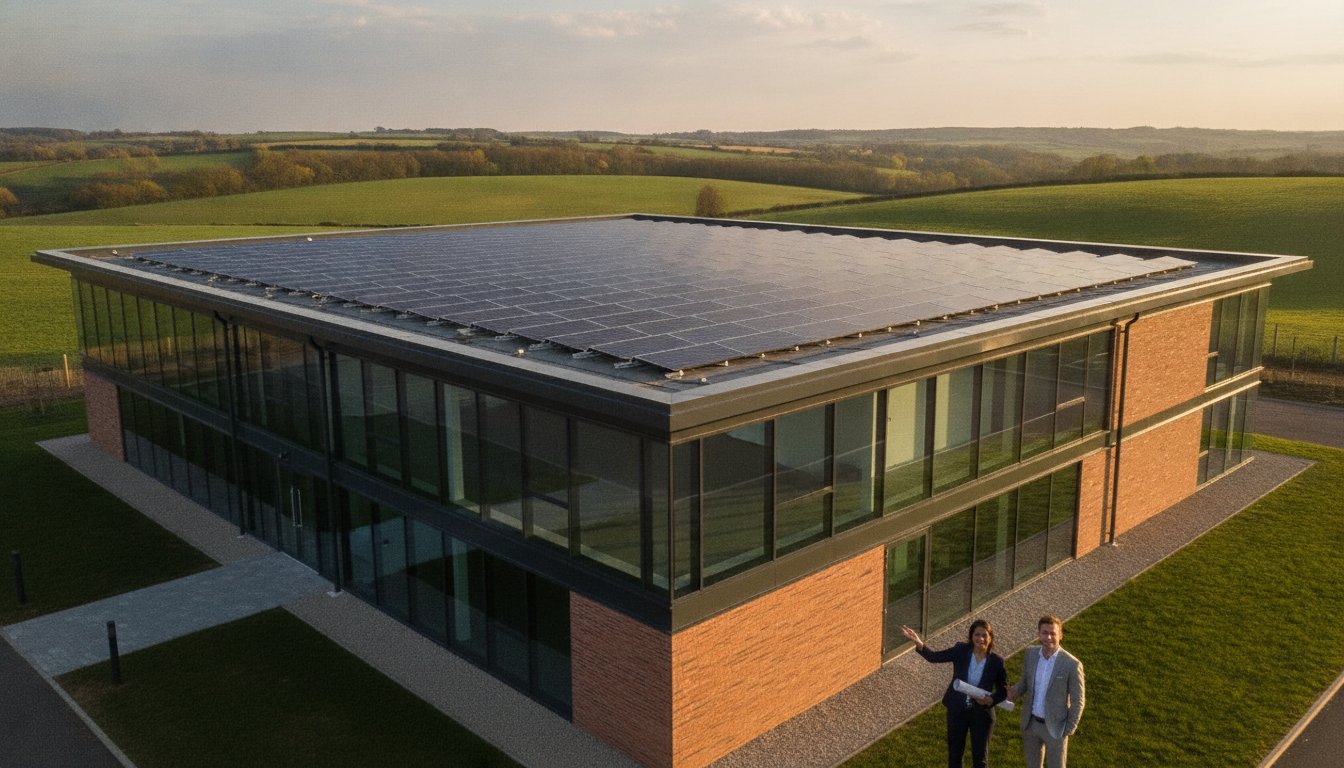
Hardware quality is only one half of the equation. The longevity and safety of home battery storage Bedfordshire depend entirely on the calibre of the installation. Selecting a certified specialist ensures your system is compliant with current UK wiring regulations and eligible for financial incentives. In 2026, the Microgeneration Certification Scheme (MCS) remains the benchmark for professional standards. Without an MCS-certified installer, you'll find it nearly impossible to access the Smart Export Guarantee (SEG) payments that are vital for your system's return on investment.
Local expertise is equally important when dealing with the District Network Operator (DNO). In Bedfordshire, the grid is managed by UK Power Networks. A local installer understands the specific constraints of the regional infrastructure and the nuances of G98 and G99 applications. We prioritise transparency and precision throughout this process. Beyond technical skill, we maintain memberships with consumer protection bodies like RECC or HIES. These organisations provide you with an insurance-backed guarantee and a clear code of conduct, ensuring your investment is protected from the first day of installation.
The Professional Site Survey Process
A reliable installation starts with a physical inspection, not a guess based on satellite imagery. Remote quotes frequently overlook critical details that lead to hidden costs or system failures. During a survey, a specialist evaluates your existing fuse board capacity, identifies the most efficient cable runs, and assesses potential mounting locations. We check for adequate ventilation and structural integrity to ensure the system operates within its optimal temperature range. This methodical approach prevents undersizing and ensures the hardware integrates seamlessly with your home's electrical architecture. We provide professional solar survey and quotes as a standard part of our design-led process.
G98 and G99 Grid Connection Applications
Every battery installation must be reported to the DNO to maintain grid stability. The type of application required depends on the total output of your system. Systems with a discharge capacity below 3.68kW per phase usually fall under the G98 "fit and inform" process. However, the high-performance 5kW systems we recommend for most Bedfordshire homes require a G99 application. This must be approved before work begins. In the Bedfordshire region, the approval timeline for a G99 application typically ranges from 30 to 90 days. We manage this entire technical paperwork trail on your behalf, ensuring your system is legally connected and fully recognised by the grid. If you're ready to secure your energy future with a compliant, high-performance system, contact our specialist team to arrange your bespoke assessment.
Bespoke Energy Storage Solutions by Empire Electrical Innovations
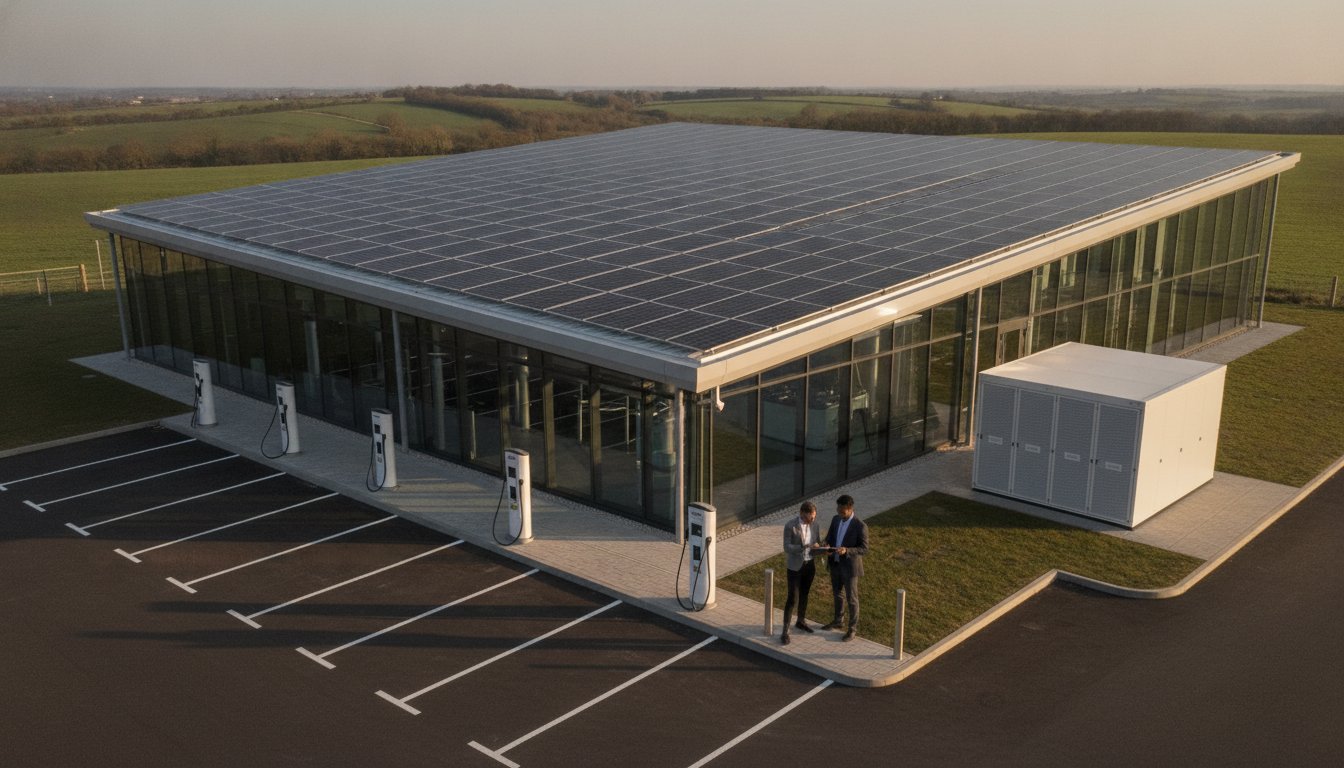
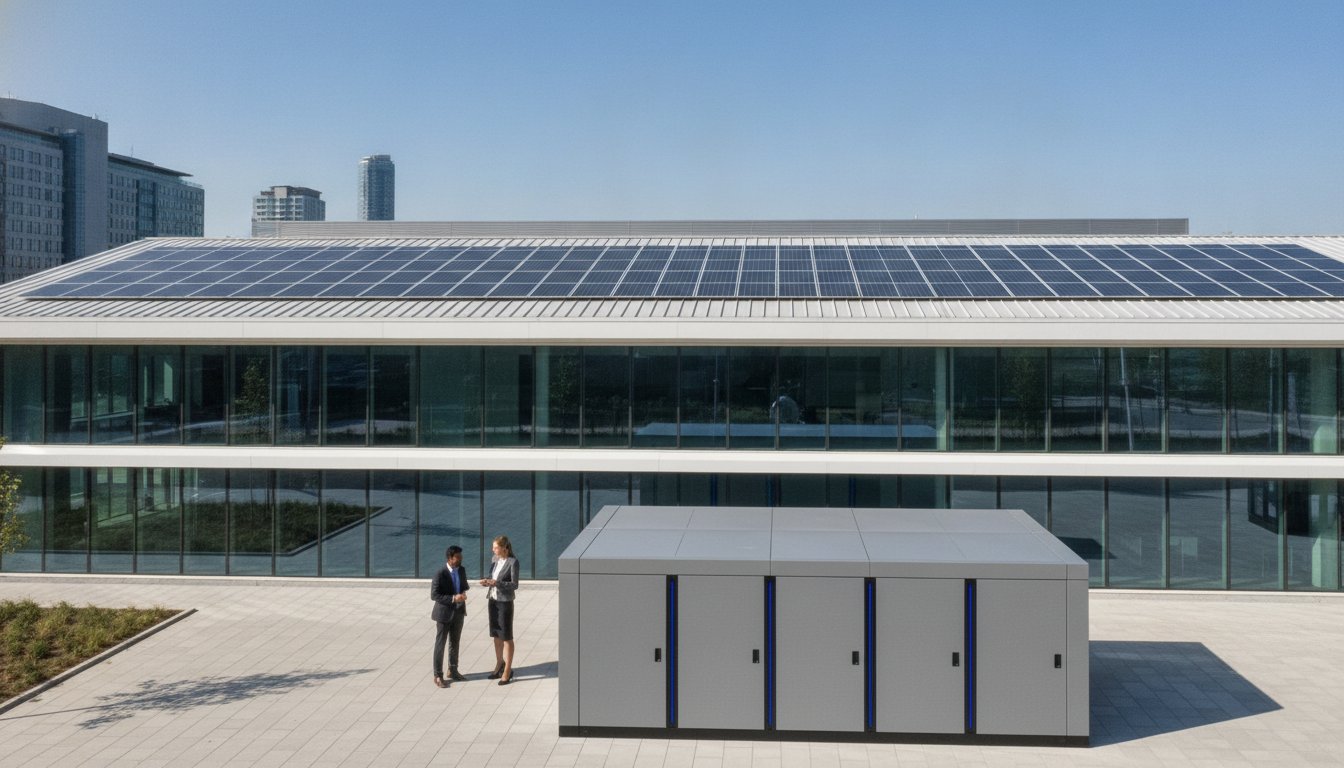
We provide a design-led approach to home battery storage Bedfordshire. Our methodology prioritises precision over convenience. We recognise that every property has a unique load profile; therefore, we avoid the generic "one-size-fits-all" kits favoured by mass-market installers. Instead, we engineer bespoke systems that integrate seamlessly with your existing infrastructure. For clients with larger estates or business interests, our expertise extends to commercial battery storage Buckinghamshire. By combining storage with commercial EV charger installation Hertfordshire, we help you build a holistic energy strategy that maximises every kilowatt generated.
Our Commitment to Quality and Compliance
Professionalism is the foundation of our identity. As a Trusted Specialist, we ensure every installation adheres to the latest BS 7671:2018+A4:2026 standards, including the mandatory safety requirements of Chapter 57. This level of technical discipline ensures your system is safe, efficient, and future-ready. We maintain MCS 012 certification, which is essential for your continued eligibility for the Smart Export Guarantee. Our workmanship is defined by a sense of "quiet authority"—it's methodical, disciplined, and organised. We don't just install hardware; we provide long-term support and maintenance packages to preserve the health of your investment. Homeowners also benefit from the current 0% VAT status on battery storage installations, making 2026 an ideal time to secure your energy independence.
Start Your Energy Transition Today
The path to reduced energy bills is clear and structured. We've refined our process into four distinct stages: Survey, Design, Install, and Save. This methodical roadmap removes the confusion often associated with renewable technology. By choosing a professionally commissioned system, you gain the peace of mind that comes from knowing your home is no longer at the mercy of volatile grid pricing. We take care of the technical complexity, from DNO notifications to smart tariff integration, so you can focus on the savings. If you're looking to implement home battery storage Bedfordshire, we invite you to book a free, no-obligation site survey. Our team will provide a bespoke quotation tailored specifically to your home's energy needs. Let's work together to build a more resilient, self-sufficient energy future for your property.
Secure Your Energy Independence Today
Transitioning to a smarter home energy system is a significant step towards long-term financial and environmental resilience. By 2026, the technology has matured, offering homeowners sophisticated tools to manage their own power with precision. Successfully implementing home battery storage Bedfordshire requires more than just high-quality hardware; it demands a deep understanding of technical compliance and grid integration. You now have the knowledge to distinguish between usable capacity and nominal figures, and you understand why the correct coupling is vital for your property's efficiency.
Our team combines local expertise with a commitment to the highest professional standards. As MCS Certified Installers, we ensure your system is eligible for export rewards whilst meeting every modern safety regulation. We focus on bespoke design to guarantee that your storage solution integrates perfectly with your household's unique energy demands. This methodical approach ensures your investment delivers performance and reliability for years to come.
Book your free Bedfordshire battery storage survey with Empire Electrical Innovations and take the first step towards a self-sufficient energy future. We look forward to helping you master your home's energy potential.
Frequently Asked Questions
How much does home battery storage cost in Bedfordshire in 2026?
Costs for a bespoke energy reserve vary based on capacity, battery chemistry, and installation complexity. Whilst 0% VAT applies to all residential installations, the final investment depends on whether you're retrofitting to an existing array or installing a new hybrid system. Factors such as discharge rates and necessary fuse board upgrades also influence the total. We recommend a professional site survey to determine the exact requirements for your property.
Can I install a battery if I do not have solar panels?
Standalone battery storage is entirely viable for homes without solar PV. You can charge the system from the grid during off-peak windows when electricity rates are at their lowest. This is particularly effective when paired with smart time-of-use tariffs. Since February 2024, standalone installations also benefit from 0% VAT, making it a cost-effective way to manage rising energy bills without needing a full solar array.
How long will a 10kWh battery power my home during a power cut?
A 10kWh battery typically supports an average household for 12 to 24 hours during a power cut. This duration depends on your real-time consumption and which appliances you choose to run. High-demand items like electric hobs or kettles will deplete the reserve quickly. By prioritising essential circuits such as lighting, refrigeration, and internet routers, a fully charged 10kWh unit provides significant security and peace of mind.
Is it worth getting battery storage with solar panels in the UK?
Integrating home battery storage Bedfordshire with solar panels is a strategic move that increases self-consumption from around 40% to over 70%. Without storage, most of your generated power is exported to the grid during the day when demand is low. Retaining this energy for evening use significantly reduces your reliance on expensive grid imports. It's the most effective way to maximise the return on your solar investment.
What is the lifespan of a modern lithium home battery?
Most modern lithium iron phosphate batteries are designed to last between 10 and 15 years. Performance is typically measured in cycles, where one cycle represents a full charge and discharge. Premium systems often come with a 10-year warranty that guarantees at least 70% of the original capacity remains after 6,000 to 10,000 cycles. Proper installation in a stable, temperature-controlled environment helps preserve this long-term health.
Do I need planning permission for a battery storage system in Bedfordshire?
Most home battery storage Bedfordshire installations fall under Permitted Development and don't require formal planning permission. Exceptions apply if your property is a listed building or located within a conservation area. In these specific cases, you should consult Bedford Borough Council or Central Bedfordshire Council before proceeding. We always verify local planning requirements as part of our initial site assessment to ensure full compliance.
Can I add more batteries to my system later if my needs change?
Many modern systems are designed with modularity in mind, allowing for future expansion as your energy needs grow. Brands such as GivEnergy allow you to add extra battery modules to an existing hybrid inverter. This is ideal if you plan to install an EV charger or a heat pump in the coming years. It's vital to ensure your initial inverter is sized correctly to handle any potential increase in storage capacity.
How much can I save on my energy bills with a smart battery system?
Savings depend on your consumption patterns and your chosen energy tariff. By shifting your grid import to off-peak hours and maximising solar self-consumption, many households see a substantial reduction in monthly costs. Some smart tariffs even pay you to discharge energy back to the grid during peak demand events. A bespoke design ensures your system is optimised to take full advantage of these financial opportunities.
Comments