
Integrated Renewables for Business: 2026 Strategic Guide

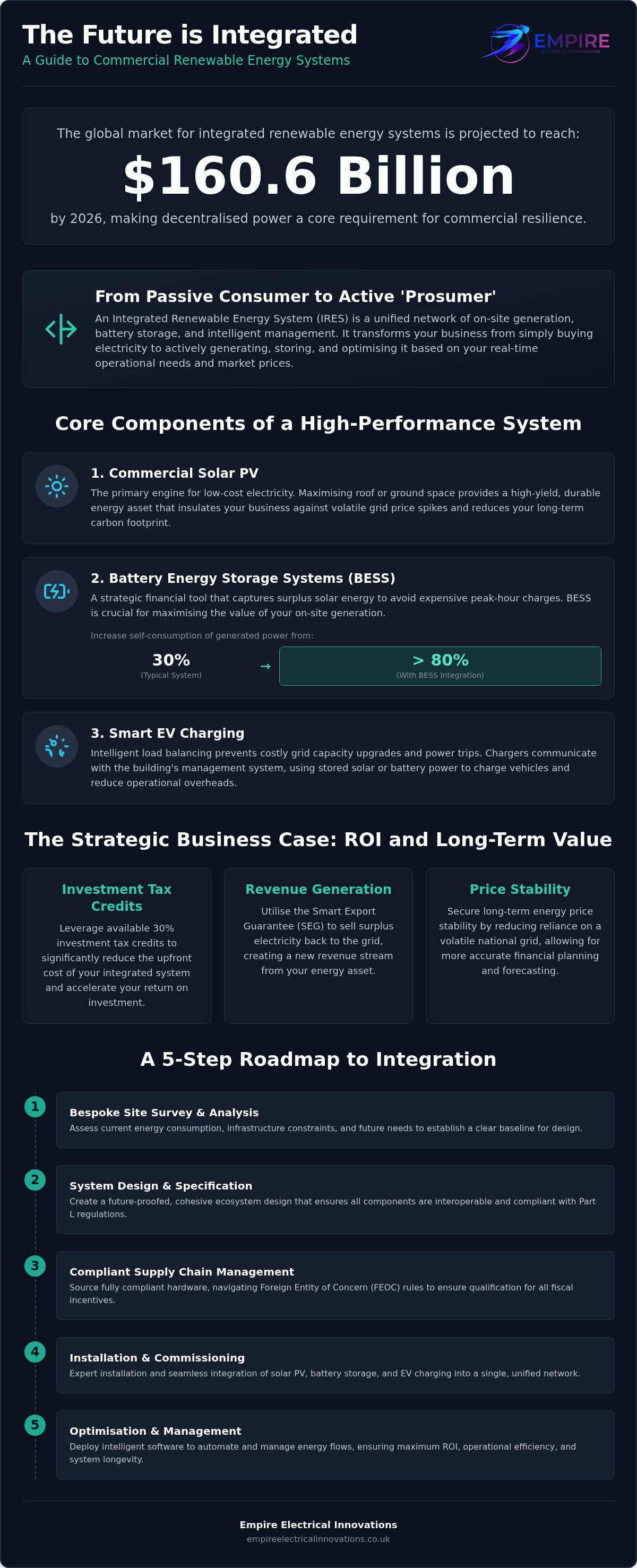
The global market for integrated renewable energy systems for business is projected to reach $160.6 billion in 2026, signalling that decentralised power is no longer an optional green initiative. It's now a core requirement for commercial resilience. Relying on a volatile national grid creates significant risk for modern enterprises, particularly as electrification and data demands accelerate.
You're likely facing the dual challenge of rising commercial energy tariffs and the strict requirements of Part L building regulations. Managing disparate contractors for solar, storage, and EV charging often adds unnecessary complexity to already strained projects. This guide outlines how to streamline your approach, transforming energy from a mounting cost into a high-performance asset. We'll examine the 30% investment tax credits available this year, the implications of new Foreign Entity of Concern rules on your supply chain, and the bespoke design strategies needed to secure your site's energy future.
Table of Contents
What are Integrated Renewable Energy Systems (IRES) for Business?
An Integrated Renewable Energy System (IRES) represents a fundamental shift in how commercial properties interact with the power grid. It isn't merely a collection of isolated components like solar panels or charging points. Instead, it's a unified network of on-site generation, battery storage, and intelligent demand-side management. This architecture allows a business to transition from a passive consumer to an active 'prosumer'. You don't just pay for electricity; you generate, store, and optimise it based on real-time operational needs.
The primary value of integrated renewable energy systems for business lies in their ability to mitigate the challenges of variable renewable energy. Solar generation is naturally intermittent, peaking when a building's demand might be low. By integrating battery energy storage systems (BESS), businesses can capture this surplus and deploy it during peak tariff periods or when cloud cover reduces output. Digitalisation serves as the central nervous system here, using sophisticated software to manage energy flows between components without human intervention.
The Concept of Sector Coupling in Commercial Settings
Sector coupling is the strategic link between power generation and transport infrastructure. On a commercial site, this typically involves synchronising solar PV arrays with EV charger installations. Rather than drawing expensive power from the grid to charge a fleet, an integrated system uses stored solar energy. This reduces fuel costs and stabilises the building's internal microgrid. Siloed systems often underperform because they cannot share data or energy, leading to wasted generation and higher operational overheads.
Why 2026 is the Pivotal Year for Energy Integration
Current energy markets remain volatile, making long-term financial planning difficult for enterprises. 2026 marks a turning point because the technology has reached a level of maturity where hardware and software are finally interoperable. New Foreign Entity of Concern (FEOC) rules have also reshaped the supply chain, making it essential to verify the sourcing of equipment to maintain compliance and qualify for fiscal incentives. Evolving ESG transparency requirements also mean that supply chains are under intense scrutiny. Businesses must now prove their carbon credentials to secure contracts. With the 2025 budget reconciliation bill shortening certain qualification windows, the urgency to implement these systems has reached its peak.
Core Components of a High-Performance Commercial Energy System
A high-performance energy infrastructure isn't built on isolated hardware. It requires a triple-threat of generation, storage, and distribution. Each component must communicate through a smart management system. This 'brain' uses real-time data to decide when to store energy, when to use it internally, or when to export it to the grid. For integrated renewable energy systems for business to succeed, they must be designed as a cohesive ecosystem rather than a series of add-ons.
Commercial Solar PV for Warehouses and Offices
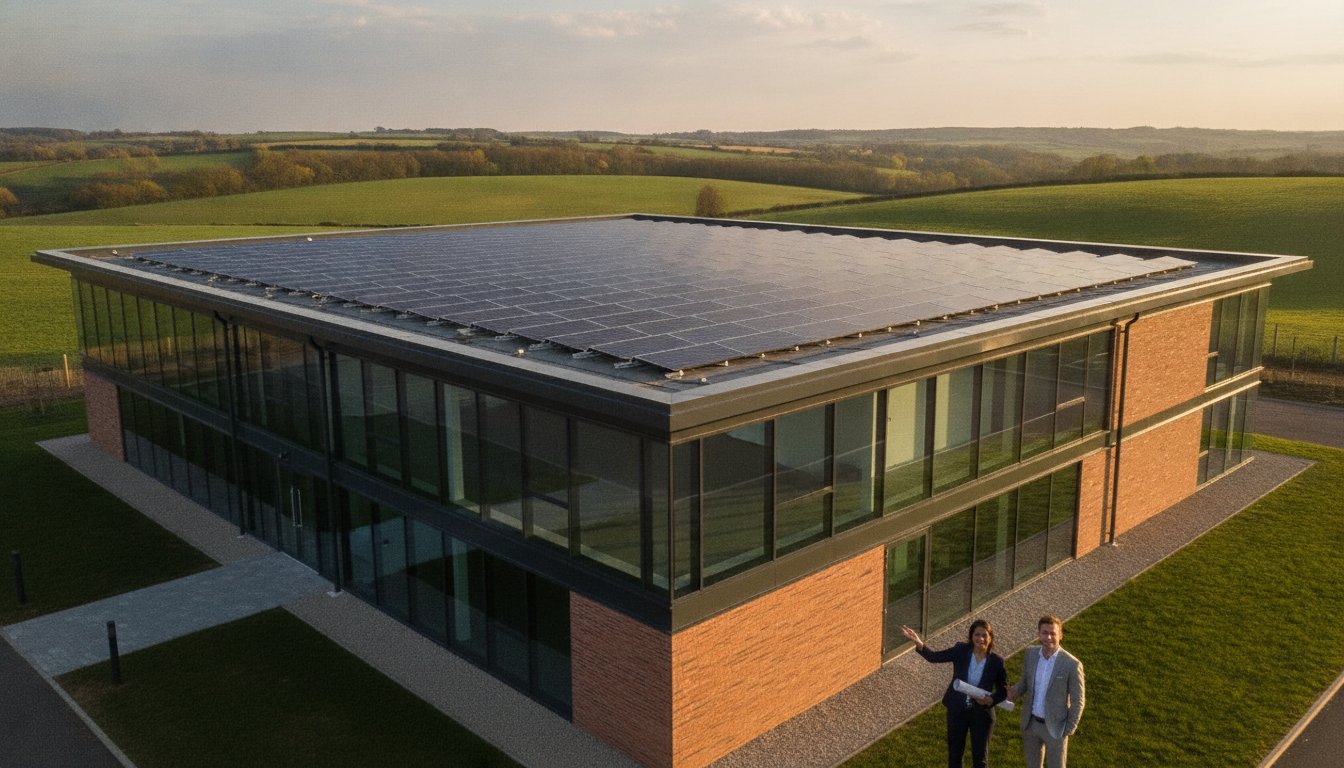
Solar PV remains the primary engine for low-cost electricity. For industrial units, maximising roof space provides a high yield with minimal structural impact. In business parks, ground-mounted arrays offer an alternative when roof load is a constraint. Implementing solar PV for commercial buildings significantly reduces long-term carbon footprints whilst insulating the business against grid price spikes. Our designs focus on durability and yield, ensuring the array remains a high-performance asset for decades.
Battery Storage: Beyond Simple Back-up
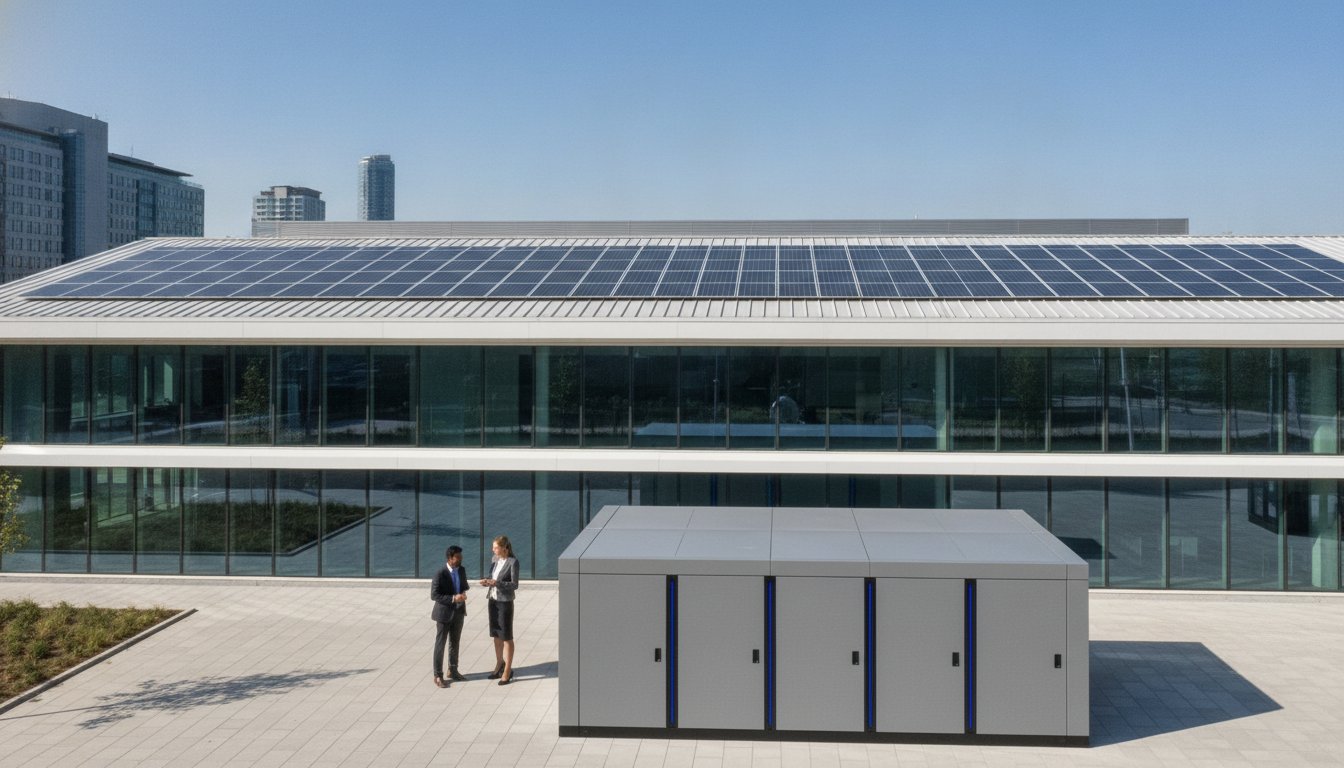
Modern battery energy storage systems (BESS) do more than provide emergency power. They are strategic financial tools. By capturing solar surplus during the day, a business can avoid expensive 'red zone' DUoS (Distribution Use of System) charges during peak evening hours. Proper solar battery installation Hertfordshire can increase self-consumption of on-site generation from a typical 30% to over 80%. This ensures that your system delivers maximum ROI by keeping power behind the meter where it's most valuable.
Smart EV Charging as a Dynamic Load
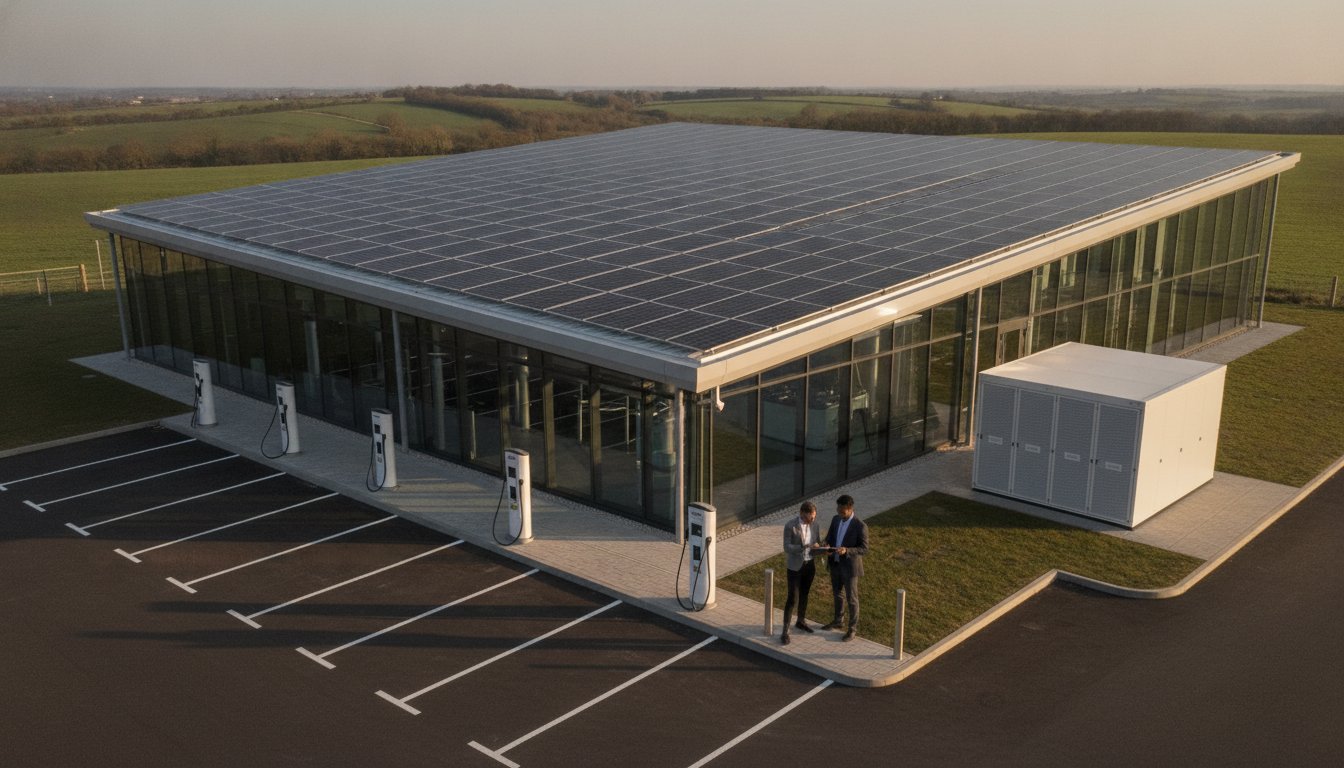
EV infrastructure shouldn't be a drain on your site's capacity. Through intelligent load balancing, chargers communicate with the building's energy management system to prevent power trips. If multiple vehicles plug in simultaneously, the system throttles the draw based on available solar or battery power. Emerging Vehicle-to-Building (V2B) technology even allows fleet batteries to support the building during peak demand. This makes commercial EV charger installation Hertfordshire a proactive part of your energy resilience strategy. It turns your car park into a flexible energy asset.
The synergy between these components is what creates true commercial resilience. Smart management systems automate every decision, monitoring weather forecasts and grid prices to ensure you're always using the cheapest, cleanest power available. To understand how these technologies can be integrated into your specific infrastructure, you can request a bespoke site survey and tailored quotation from our specialist team.
The Strategic Business Case: ROI and Long-Term Value
Investing in integrated renewable energy systems for business is a strategic move towards long-term financial stability. It's not just about energy; it's about asset management. By reducing reliance on the volatile National Grid, businesses protect their bottom line from unpredictable wholesale price surges. Beyond simple cost avoidance, these systems offer active revenue generation through the Smart Export Guarantee (SEG). This allows you to sell surplus energy back to the grid, turning your roof or car park into a profit centre whilst the system pays for itself.
Financial incentives in 2026 remain a significant driver for adoption. Current policies, such as the 30% investment tax credit and 100% first-year bonus depreciation, significantly lower the barrier to entry. The 'One Big Beautiful Bill Act' (the informal name for the 2025 budget reconciliation bill) has accelerated timelines. This makes it vital for businesses to begin construction promptly to qualify for maximum benefits. It's also essential to verify your supply chain. New Foreign Entity of Concern (FEOC) rules mean that projects using equipment with significant involvement from restricted entities may be denied these tax credits. Precision in procurement is now as important as precision in engineering.
Green buildings also command higher yields in the current market. Commercial tenants increasingly prioritise properties with low operational costs and high ESG credentials. An integrated system doesn't just lower bills. It increases the overall valuation of the property asset and ensures the building remains attractive to high-quality tenants for years to come.
Calculating ROI for Integrated Systems
Payback periods for integrated solar and battery systems have shortened considerably as of mid-2026. When you factor in the rising cost of carbon and the threat of future carbon taxes, the financial argument becomes undeniable. There's also a 'hidden' ROI to consider. A commitment to on-site renewables enhances brand reputation. It helps attract eco-conscious talent and partners who expect their associates to lead on sustainability. These figures and policies are subject to change, so early adoption remains the most secure path to high returns.
Grid Constraint Management for Developers
For developers, the biggest hurdle is often grid capacity. New construction sites frequently face limited power availability. This can stall projects or necessitate expensive substation upgrades that eat into profit margins. Integrated systems solve this by using on-site storage to manage peak loads. This allows for larger developments on sites with restricted grid connections. Compliance is another factor. Strategic integration ensures you meet the latest Part L building regulations solar panels requirements without compromising on design or performance. It turns a regulatory hurdle into a competitive advantage.
Planning and Implementation: A 5-Step Roadmap to Integration
Deploying integrated renewable energy systems for business is a methodical process that demands technical precision. It isn't a simple hardware purchase. It's a fundamental infrastructure upgrade. A successful transition follows a structured five-step roadmap to ensure safety, compliance, and performance. This begins with a comprehensive site survey to analyse structural integrity and electrical capacity. We then move to bespoke system design, tailoring the mix of solar, storage, and EV points to your specific usage patterns. The third step involves the DNO application and legal compliance, followed by professional installation and commissioning. Finally, ongoing monitoring and optimisation use real-time data to refine energy performance and maximise ROI.
The Critical Importance of a Professional Solar Survey
Off-the-shelf energy solutions rarely deliver promised commercial returns. Every site has unique constraints, from roof orientation to the age of the existing switchgear. A professional survey assesses the synergy between your current electrical infrastructure and new renewables. This prevents costly retrofitting later. A G99 application is the mandatory technical submission to the Distribution Network Operator (DNO) for any energy system with a capacity exceeding 3.68kW per phase. Securing this approval is a prerequisite for grid connection and requires expert handling of technical drawings and load calculations.
Integrating Telecoms and Energy Infrastructure
Smart energy management is data-intensive. Your system's 'brain' relies on constant communication between components to make split-second decisions about storage and usage. This requires robust data connectivity. Working with telecoms ducting contractors Hertfordshire allows businesses to streamline site preparation. By laying the groundwork for fibre and energy simultaneously, you future-proof the site whilst reducing overall civil works costs. This integrated approach to infrastructure ensures that your energy system remains connected and capable of receiving remote software updates as technology evolves.
Precision in the planning phase eliminates the risk of business disruption during installation. Our team handles every technical detail, from structural load assessments to fibre blowing for smart monitoring. To begin your transition with a trusted specialist, you can book a professional site survey to receive a tailored infrastructure quotation.
Future-Proofing with Empire Electrical Innovations
Achieving energy independence requires more than just high-end hardware. It demands a partner who understands the intricate relationship between electrical infrastructure and long-term commercial goals. Empire Electrical Innovations specialises in the design and delivery of integrated renewable energy systems for business across the South East. We don't believe in generic templates. Every project is rooted in a methodical, disciplined approach that ensures your infrastructure is compliant with the latest 2026 UK electrical and building standards. Our work provides the foundation for operational security, allowing you to focus on your core business whilst we manage the technical complexity.
Our partnership-first philosophy means we're with you from the initial survey through to commissioning and long-term support. We operate with a sense of quiet innovation. This means we implement the most advanced solar PV, battery storage, and EV charging technology without the need for flashy marketing claims. Our reputation is built on workmanship and clear communication. We serve as a trusted specialist for businesses in Hertfordshire, Bedfordshire, and Buckinghamshire, providing the local expertise needed to navigate regional grid constraints and DNO requirements.
Our Sector-Specific Expertise
We tailor our technical work to the unique environments of our clients. For property developers and construction sites, we design systems that bypass grid capacity issues, allowing projects to proceed without costly delays. Schools and public sector buildings benefit from our focus on reliable, low-maintenance infrastructure that provides predictable energy costs for decades. In the industrial sector, we deploy high-capacity systems for warehouses and manufacturing hubs. These installations are designed to support heavy machinery and large EV fleets whilst maximising on-site solar yield.
Start Your Energy Transformation
Transitioning to a high-performance energy asset starts with a clear understanding of your site's potential. We provide a free, no-obligation site survey and tailored quotation to help you identify the most effective mix of technologies. Our team handles the entire process, including the integration of commercial telecoms infrastructure and fibre blowing to ensure your smart management systems have the connectivity they require. This methodical approach eliminates guesswork and ensures your project is delivered on time and to the highest professional standards. You can contact us to organise your commercial energy survey and begin the journey toward a more resilient, future-proofed business.
Securing Your Commercial Energy Future
The transition to on-site generation has shifted from an optional green initiative to a core requirement for business resilience. Implementing integrated renewable energy systems for business allows you to reclaim control over rising tariffs whilst ensuring compliance with evolving Part L building regulations. By synchronising solar PV, battery storage, and EV charging, your property becomes a high-performance asset rather than a mounting operational cost.
Empire Electrical Innovations provides the technical precision needed for these complex integrations. We are fully accredited renewable energy contractors with specialised expertise in both electrical and telecoms infrastructure. This dual capability ensures your smart energy management system remains connected and efficient. We have served Hertfordshire, London, and the South East with a methodical, partnership-first approach that prioritises workmanship over empty promises.
Book your free commercial energy site survey with Empire Electrical Innovations to receive a bespoke roadmap for your site. We look forward to helping you build a more secure and sustainable infrastructure.
Frequently Asked Questions
What is an integrated renewable energy system for businesses?
An integrated renewable energy system is a unified infrastructure that combines on-site generation, storage, and distribution. Unlike siloed installations, these components communicate through a smart controller to optimise energy flow. This creates a resilient microgrid that reduces reliance on the National Grid whilst prioritising the cheapest, cleanest power available for your operations.
How much can a business save by integrating solar and battery storage?
Savings vary based on your specific energy profile, but integration significantly improves financial performance. By pairing solar with battery storage, businesses often increase their self-consumption from roughly 30% to over 80%. This directly avoids expensive peak-time tariffs and protects the business from volatile wholesale price fluctuations.
Do I need planning permission for commercial solar panels in Hertfordshire?
Most commercial solar installations fall under Permitted Development Rights, meaning formal planning permission isn't always required. However, restrictions apply to listed buildings, conservation areas, or ground-mounted arrays. We recommend a professional site survey to verify the specific requirements of your local council in Hertfordshire or the surrounding counties.
What is a DNO application and why does my business need one?
A DNO application is a technical submission to your local Distribution Network Operator to secure permission for grid connection. Any system exceeding 3.68kW per phase requires a G99 application. This process ensures that your integrated renewable energy systems for business won't negatively impact the local grid's stability or safety.
Can integrated systems help if my site has limited grid capacity?
Integrated systems are highly effective for sites with restricted grid capacity. By using battery storage to manage peak loads, a business can operate high-draw equipment or EV chargers that would otherwise exceed the grid's limit. This peak-shaving approach often bypasses the need for costly and time-consuming substation upgrades.
How long does it take to install a full commercial energy system?
Installation timelines depend on the project's scale, but the physical work often takes between one and four weeks. The pre-construction phase, including DNO applications and technical design, can take three to six months. Starting the process early is essential to navigate lead times for specialised components and grid approvals.
What maintenance is required for integrated renewable systems?
These systems are designed for longevity with minimal intervention. Annual electrical testing and periodic solar panel cleaning are recommended to ensure maximum efficiency. We use remote monitoring technology to track system performance and deploy software updates, ensuring the infrastructure remains secure and optimised without disrupting your daily operations.
Are there grants available for commercial solar and EV charging in 2026?
Direct grants have largely been replaced by significant tax incentives in 2026. Businesses can currently claim a 30% investment tax credit and 100% first-year bonus depreciation on qualifying systems. It's also worth checking for regional South East initiatives that support workplace EV charging infrastructure and carbon reduction targets.
Comments