
Integrating EV Chargers with Solar Panels: The 2026 Ultimate Guide

Why are you still paying for petrol or grid electricity when your roof could be your personal filling station? Many homeowners feel hesitant about integrating EV chargers with solar panels because they worry about the UK's winter light levels or the potential cost of upgrading older properties. It's a common concern; you want the benefits of green energy without the technical headaches or hidden installation fees.
We understand that true energy independence requires more than just hardware. It requires a bespoke, synchronised system. In this 2026 guide, you'll discover how to achieve zero-cost motoring by aligning your solar PV generation with smart charging infrastructure. We provide a clear roadmap for lowering your monthly bills and reducing your carbon footprint through intelligent energy management.
We'll address the mandatory battery myth, explain how to maximise yields during the colder months, and show you how to future-proof your home against volatile energy prices. Whether you're starting from scratch or upgrading an existing system, this is your definitive path to a more sustainable, cost-effective lifestyle. Our focus is on precision, compliance, and long-term value for every property.
Table of Contents
The Synergy of Solar PV and EV Charging in 2026
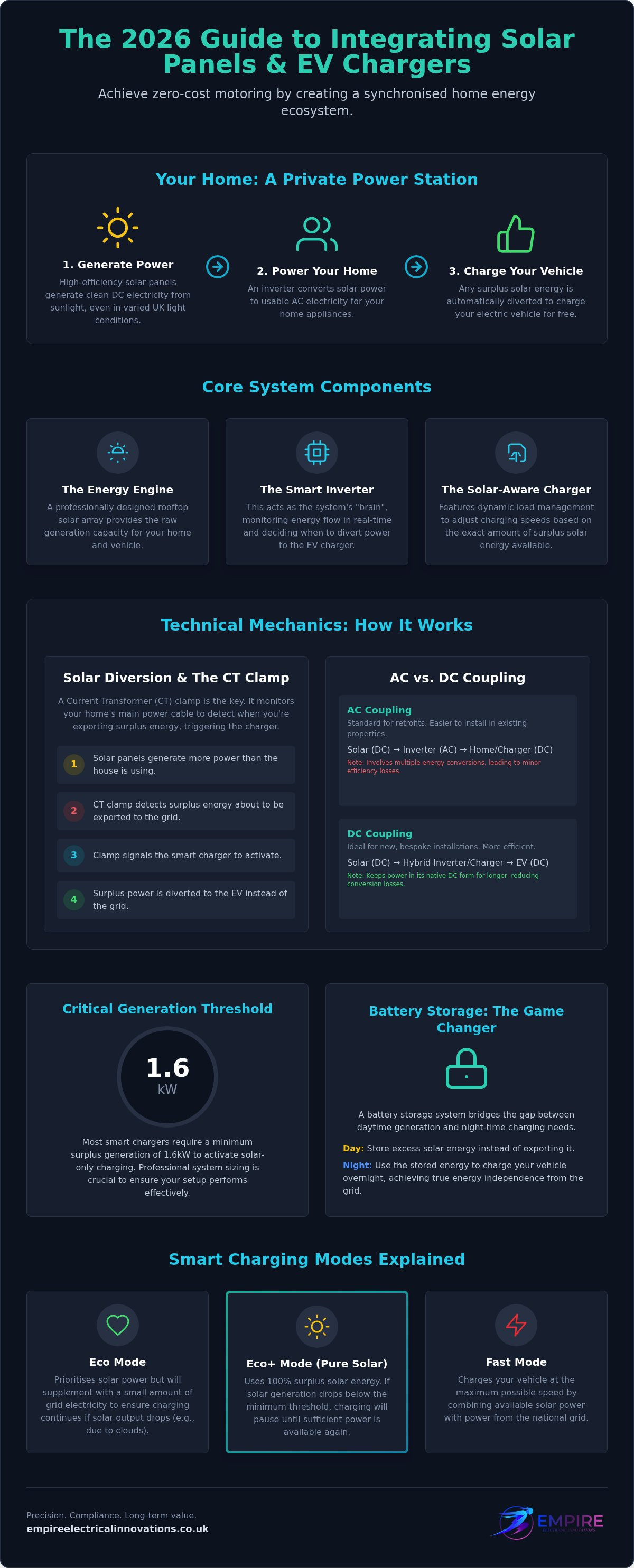
Solar-EV integration is no longer a niche concept for early adopters. It is a sophisticated technical synchronisation where a smart EV charger communicates directly with your photovoltaic inverter. This connection ensures that every kilowatt-hour generated by your roof is utilised effectively rather than being lost to the grid for minimal returns. Integrating EV chargers with solar panels creates a closed-loop energy ecosystem that prioritises self-consumption, turning your home into a private power station.
2026 marks a definitive tipping point for energy independence in the UK. The maturity of smart communication protocols means that hardware from different manufacturers can now "talk" to each other with unprecedented precision. We have moved from simple "low carbon" commuting to a genuine "zero carbon" reality. By charging your vehicle with surplus sunshine, you eliminate the tailpipe emissions and the carbon footprint associated with grid-scale electricity production. The financial benefits extend beyond fuel savings; you are effectively hedging against future energy price hikes while increasing the long-term value of your property.
Why Grid Charging is No Longer the Only Option
Peak-time electricity costs in London and the South East continue to put pressure on household budgets. Relying solely on the grid leaves you vulnerable to market volatility and infrastructure surcharges. By integrating EV chargers with solar panels, you bypass these external pressures. This shift transforms you from a passive consumer into a "prosumer"-someone who both produces and consumes their own energy. It provides a level of security that traditional utility models cannot match. Power is precision, and generating it on-site is the most reliable way to maintain fixed motoring costs.
The Core Components of an Integrated System
A high-performance integrated system relies on three primary pillars working in harmony. Each component must be professionally commissioned to ensure safety and efficiency standards are met.
The Energy Engine: A well-designed Rooftop solar power system provides the raw generation capacity. In 2026, high-efficiency panels ensure maximum yield even in the varied light conditions of Hertfordshire and Bedfordshire.
The Smart Inverter: This acts as the "brain" of the installation. It monitors household demand in real-time and decides exactly when to divert power to your vehicle.
The Solar-Aware Charger: Unlike standard units, these smart chargers feature dynamic load management. They can pause or adjust charging speeds based on exactly how much surplus solar energy is available at any given second.
This technical synergy ensures that your car only sips from the grid when absolutely necessary. It is a methodical approach to energy management that values workmanship and technical compliance over off-the-shelf, "one size fits all" solutions.
Technical Mechanics: How Solar Panels Power Your EV
Integrating EV chargers with solar panels relies on a process called solar diversion. The system doesn't just "send" electricity to the car; it actively monitors your home's total energy balance. The technical linchpin of this setup is the Current Transformer (CT) clamp. This small device is clipped around your property's main incoming power cable to detect exactly when you're exporting surplus energy to the grid. When the clamp sees "export" status, it signals the smart charger to start directing that power into your vehicle's battery instead.
Efficiency often depends on whether your system uses AC or DC coupling. AC coupling is the standard for most UK retrofits because it allows the solar inverter and the EV charger to operate independently. Whilst this is easier to install in older properties, it involves multiple energy conversions. DC coupling is becoming more popular in new, bespoke installations because it keeps the electricity in its native DC form for longer, reducing conversion losses. If you're considering a bespoke setup, a professional site survey can determine which coupling method suits your property's existing infrastructure.
Smart Charging Modes: Eco, Eco+, and Fast
Modern integrated systems offer three distinct charging profiles to suit your daily schedule. These modes allow you to control exactly how much grid power you consume.
Eco Mode: This setting uses all available solar generation but supplements it with a small amount of grid power. It ensures your car charges at a steady minimum rate, usually around 1.4kW, even if a cloud passes over your panels.
Eco+ Mode: This is the "pure" solar setting. The charger will only operate when your roof produces more than your household is currently using. If your solar yield drops below the minimum threshold, the charge pauses automatically.
Fast Mode: This ignores solar prioritisation entirely. It draws maximum power from both the panels and the grid to ensure your vehicle is ready for an immediate journey.
The Importance of Smart Inverters in 2026
Your inverter is the commander of your home energy ecosystem. In 2026, the shift towards "solar-aware" technology means your inverter must be capable of high-speed data exchange with your charger and home automation software. A hybrid inverter is a single unit that manages energy flow between the solar panels, the home battery, and the electrical grid. Selecting a high-specification hybrid inverter ensures your system is future-ready and capable of handling complex load-balancing tasks as your energy needs evolve.
Sizing Your System: How Many Panels Do You Need?
Determining the correct array size is the difference between a system that delivers zero-cost motoring and one that leaves you reliant on the grid. When integrating EV chargers with solar panels, you must first account for your household baseload. This is the constant background energy consumed by fridges, routers, and standby appliances. Only after this demand is met can the surplus be diverted to your vehicle. In the UK, a typical household baseload ranges from 300W to 800W, which must be subtracted from your total solar generation before the car receives a single watt.
You must also consider the 1.6kW threshold. Most smart EV chargers require a minimum current of 6 amps to initiate a charging session, which equates to roughly 1.4kW to 1.6kW of surplus solar power. If your array produces less than this, the charger will remain idle unless it draws from the grid. This technical requirement is why oversizing your solar array is often the smartest move for long-term ROI. A larger system ensures you hit that 1.6kW trigger point earlier in the morning and maintain it later into the evening, even on overcast days.
Residential Sizing Guide
For a daily commute of 30 miles, your vehicle will typically require around 8kWh to 10kWh of energy. A standard 4kWp system in the South East generates approximately 3,400kWh to 4,000kWh annually, but this yield is spread unevenly across the seasons. Whilst a 4kWp array might cover your 30-mile commute during a clear July day, it will struggle to do so whilst simultaneously powering a home. We generally recommend an 8kWp system for modern EVs with larger 77kWh batteries. This provides the headroom needed to charge the car and run the household without constant grid supplementing.
South-facing roofs: Produce a high peak of energy during midday, ideal for rapid afternoon charging.
East/West arrays: Provide a lower peak but a much wider generation window, capturing early morning and late evening sun.
Seasonal Realities in the South East
Solar yield in December is roughly 20 percent of what you can expect in June. During the winter months, integrating EV chargers with solar panels often requires a hybrid approach. You will likely rely on off-peak grid tariffs to top up the battery overnight. However, a bespoke solar panel installation Hertfordshire can be designed to maximise roof space, ensuring that even low-level winter light contributes to your motoring needs. Precision design ensures your system remains a high-yield asset throughout the year.
Battery Storage: The Game Changer for Integrated Charging
For most UK homeowners, the peak period for solar generation occurs whilst their vehicle is parked at a workplace. This timing mismatch makes battery storage a critical component when integrating EV chargers with solar panels. Without a battery, your surplus energy is exported to the grid during the day, forcing you to buy it back at a higher rate at night. Storing daytime sunshine for night-time charging is the most effective way to close the loop, though you must account for a typical round-trip efficiency loss of approximately 10 to 15 percent during the energy conversion process.
2026 has seen the rapid maturation of Vehicle-to-Home (V2H) and Vehicle-to-Grid (V2G) technologies. These systems allow your EV to act as a secondary home battery, providing power back to your property during peak evening hours. However, the logic of prioritisation remains vital. A well-commissioned system ensures that critical household loads, like lighting and refrigeration, are powered first before the car draws from the stored reserves. This intelligent management prevents you from draining your home battery on a vehicle charge only to find yourself using expensive grid power for your evening meal.
Choosing the Right Battery Capacity
Matching your battery size to your EV's daily consumption is a technical requirement for high ROI. If you drive 30 miles a day, you need roughly 10kWh of storage just for the vehicle, plus additional capacity for household use. Utilising modular solutions like GivEnergy battery storage allows you to scale your system as your needs evolve. High-discharge rates are equally important. Your battery must be capable of delivering power fast enough to satisfy the charger's minimum requirements without constantly dipping into the grid.
Commercial and Industrial Battery Integration
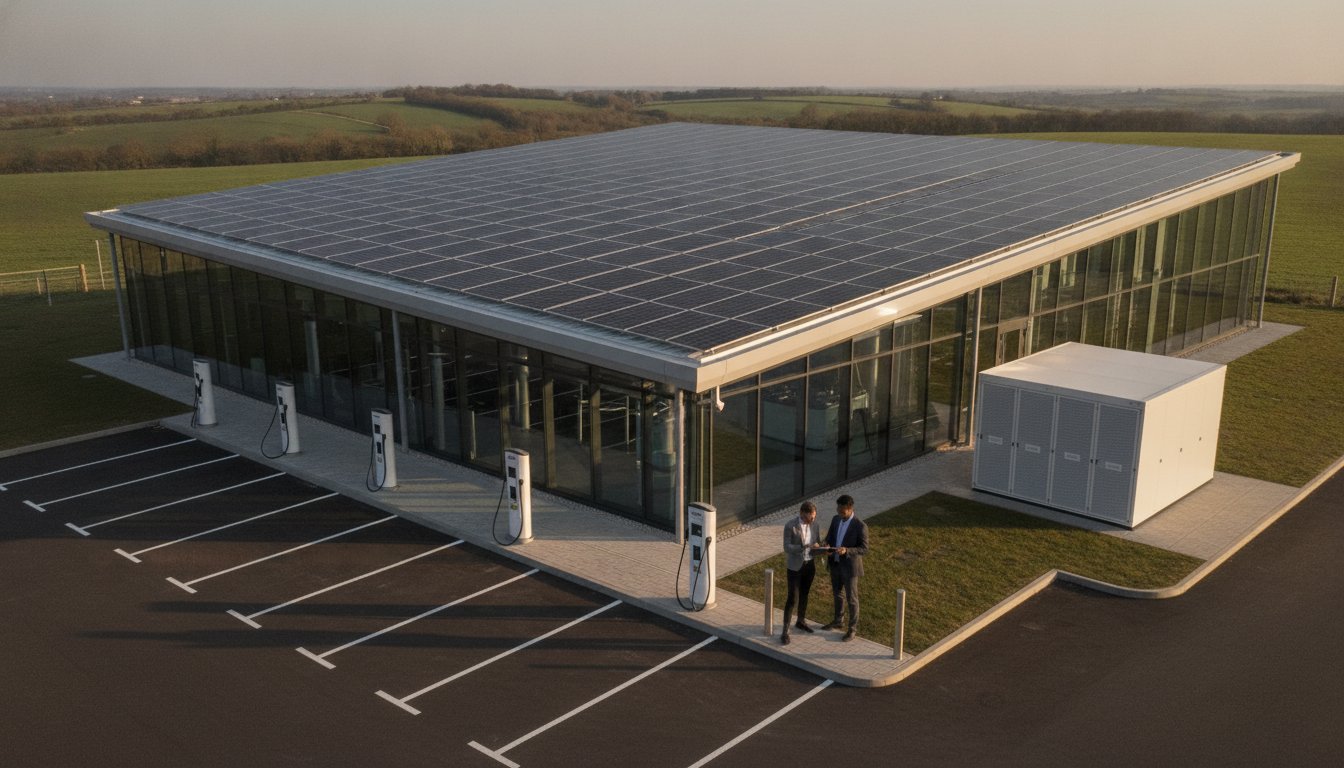
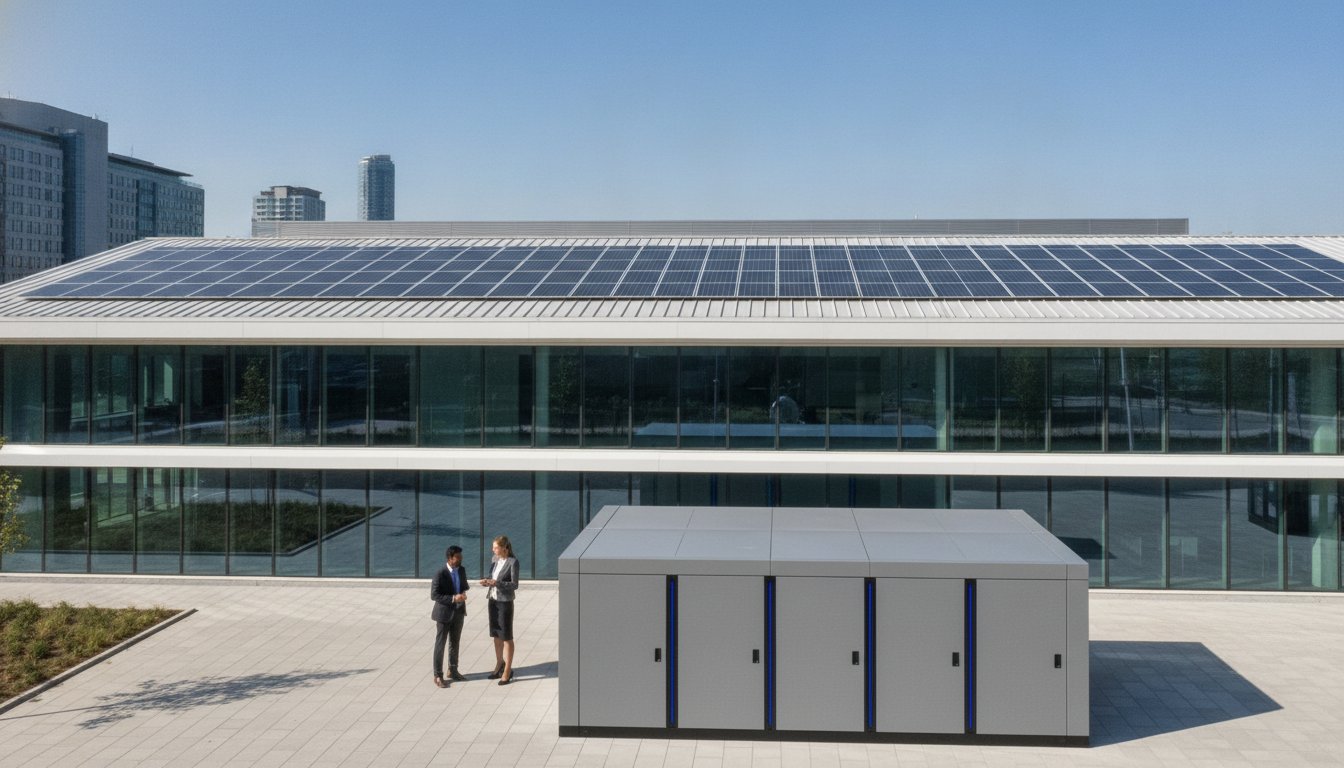
The ROI for warehouses and offices in Bedfordshire and Hertfordshire is often even more compelling than in residential settings. Integrating EV chargers with solar panels on a commercial scale, supported by large-scale battery arrays, allows businesses to charge entire employee fleets at zero cost. Batteries also enable "peak shaving," where stored energy is used to power the site during expensive "red-zone" tariff periods. This strategy protects the business from high demand charges and ensures that EV infrastructure doesn't overwhelm the local grid connection. If you are looking to secure your energy future, you can book a technical site survey to assess your property's capacity.
Professional Installation and ROI in the South East
The financial logic of integrating EV chargers with solar panels is rooted in the "Break-Even" calculation. When you compare petrol motoring, grid-only EV charging, and solar-integrated charging, the disparity is stark. A petrol vehicle currently costs significantly more per mile than an EV charged on a standard grid tariff. However, a bespoke solar-EV system allows you to utilise surplus energy that would otherwise be exported for a few pence via the Smart Export Guarantee (SEG). By diverting this power into your car, you are effectively "buying" your fuel at 0p per kWh. This acceleration of ROI is why bespoke design beats "one-size-fits-all" bundles; a tailored system matches your specific roof yield to your driving habits, ensuring no energy is wasted.
In 2026, UK businesses and homeowners can still access various tax incentives. Capital allowances for commercial installations and the zero-rating of VAT on residential energy-saving materials remain pivotal for lowering upfront costs. We focus on high-yield ROI by designing systems that maximise self-consumption. A professional installation isn't just about mounting hardware. It is about technical commissioning that ensures your charger, inverter, and battery work as a single, efficient unit.
Compliance and Standards
Safety and legal adherence are the foundation of our service. Every installation must meet rigorous UK standards, including MCS certification and NICEIC approval. MCS certification is particularly vital, as it is a mandatory requirement for accessing SEG payments in the South East. Furthermore, we manage the mandatory DNO (Distribution Network Operator) notification process on your behalf. This ensures the local grid can handle your system's export and import capacities without issue.
For those involved in property development, Part L building regulations now mandate higher energy efficiency standards for new-build properties. Integrating EV chargers with solar panels is often the most direct route to meeting these compliance targets. We ensure that every installation is future-proofed and fully compliant with the latest 2026 amendments to the Wiring Regulations.
Your Journey to Energy Independence
The process begins with a professional solar survey. We don't believe in guesswork. Our specialists assess your roof orientation, shading factors, and electrical infrastructure in Hertfordshire or Bedfordshire to provide a data-driven quotation. This methodical approach ensures your system performs exactly as promised from day one. We handle the technical complexity so you can enjoy the simplicity of zero-cost motoring. Precision is our standard. Reliability is our promise.
Ready to secure your energy future? Contact us for a bespoke solar and EV integration quote and take the first step toward true energy independence.
Securing Your Energy Independence
Transitioning to a solar-powered driving experience is a strategic investment in your property's long-term value. We have explored how technical synchronisation between your inverter and charger effectively eliminates grid reliance. By prioritising bespoke system design over off-the-shelf bundles, you ensure that every ray of sunshine is captured and utilised rather than exported for minimal gain.
Successful implementation relies on understanding the technical synergy between generation and storage. Integrating EV chargers with solar panels isn't just about installing hardware; it's about intelligent energy management that accounts for your household's unique load profile. As MCS Certified installers, we focus on delivering maximum ROI through precision engineering and local expertise across London and the Home Counties.
The path to zero-cost motoring starts with professional insight. Book your free solar-EV integration survey with our Hertfordshire experts to begin your transition. We look forward to helping you build a cleaner, more resilient energy future for your home or business.
Frequently Asked Questions
Can I charge my EV with solar panels if I don't have a home battery?
Yes, you can charge your vehicle without a battery, provided you are home during peak daylight hours. The smart charger will monitor your rooftop generation and divert surplus energy directly into your car. However, if you commute during the day, you will likely miss the peak generation window. In this scenario, your surplus energy is exported to the grid, and you must pay for grid electricity at night.
How many solar panels are needed to fully charge a standard electric car?
A typical 4kWp system, consisting of roughly 10 to 12 high-efficiency panels, is generally sufficient to cover 10,000 miles of annual driving. This assumes a standard efficiency of 3 miles per kWh. However, you must also account for your household's baseline energy consumption. For larger vehicles or higher mileage, we often recommend an 8kWp array to ensure you have enough surplus for both the property and the vehicle.
Will my solar panels charge my car on a cloudy day in the UK?
Yes, photovoltaic panels generate electricity from daylight rather than direct sunlight, so they will still function on overcast days. However, the output will be significantly lower than on a clear day. Your smart charger will automatically adjust the charging speed to match this reduced yield. If the generation falls below the 1.4kW minimum threshold, the system may pause the charge until light levels improve or draw a small supplement from the grid.
Do I need a special type of EV charger for solar integration?
Yes, you require a "solar-aware" smart charger that features dynamic load balancing. Standard chargers cannot communicate with your solar inverter and will simply draw maximum power from the grid regardless of your solar output. Successfully integrating EV chargers with solar panels requires a unit that can detect surplus energy and modulate its charging rate in real-time. This ensures you are using 100 percent green energy whenever possible.
What is the typical ROI for integrating solar panels with an EV charger?
Most homeowners see a full return on investment within 7 to 10 years, depending on their annual mileage and energy usage. By utilising free solar energy for motoring, you avoid the rising costs of petrol and grid electricity. The ROI is further accelerated by the current 0 percent VAT on residential solar installations. A bespoke design ensures the system is sized correctly for your specific needs, maximising your long-term financial gains.
Is it better to export solar energy to the grid or use it to charge my car?
It is almost always more financially beneficial to use the energy yourself. Current Smart Export Guarantee (SEG) rates typically range from 5p to 15p per kWh, whereas grid electricity often costs significantly more. By using your solar energy to power your vehicle, you are effectively "saving" the full cost of a grid kilowatt-hour. Self-consumption is the most efficient way to lower your overall energy bills and reduce your carbon footprint.
Can I add a solar-compatible charger to an existing solar PV system?
Yes, most existing solar PV systems can be retrofitted with a solar-compatible charger. The installation involves adding a Current Transformer (CT) clamp or a smart sensor to your electrical system. This allows the new charger to monitor your existing solar generation and household load. It is a straightforward process that does not usually require changes to your actual solar panels, making it an excellent way to upgrade your home's energy infrastructure.
How does V2G (Vehicle-to-Grid) technology work with solar panels in 2026?
Vehicle-to-Grid (V2G) technology allows your EV battery to act as a secondary storage unit for your home. In 2026, bi-directional chargers enable you to store surplus solar energy in your car during the day and discharge it back to the home or grid during peak evening hours. This technical synergy helps balance the local grid and provides an additional layer of energy security. It essentially turns your car into a mobile battery storage system.
Comments