
Solar PV Design and Installation Guide 2026

What if the most expensive part of your renewable energy system isn't the hardware, but a single overlooked calculation during the planning phase? Professional solar PV design and installation is no longer just about mounting panels on a roof. It is a sophisticated engineering exercise. Precision. Compliance. Performance. In 2026, a successful system must account for evolving grid regulations, strict structural load requirements, and the latest safety standards.
We recognise that the technical hurdles often feel overwhelming. You might feel uncertain about the difference between kWp and kWh, or anxious about how your roof handles the weight of a high-performance array. It's a common concern for those seeking long-term reliability. This guide simplifies that complexity. We'll walk you through the technical journey from the initial site survey to final commissioning and DNO grid approval. You will gain a clear understanding of the design-to-delivery timeline whilst learning how to future-proof your investment. We focus on delivering lower energy bills through precise, expert engineering that stands the test of time.
Table of Contents
The Importance of Bespoke Solar PV Design
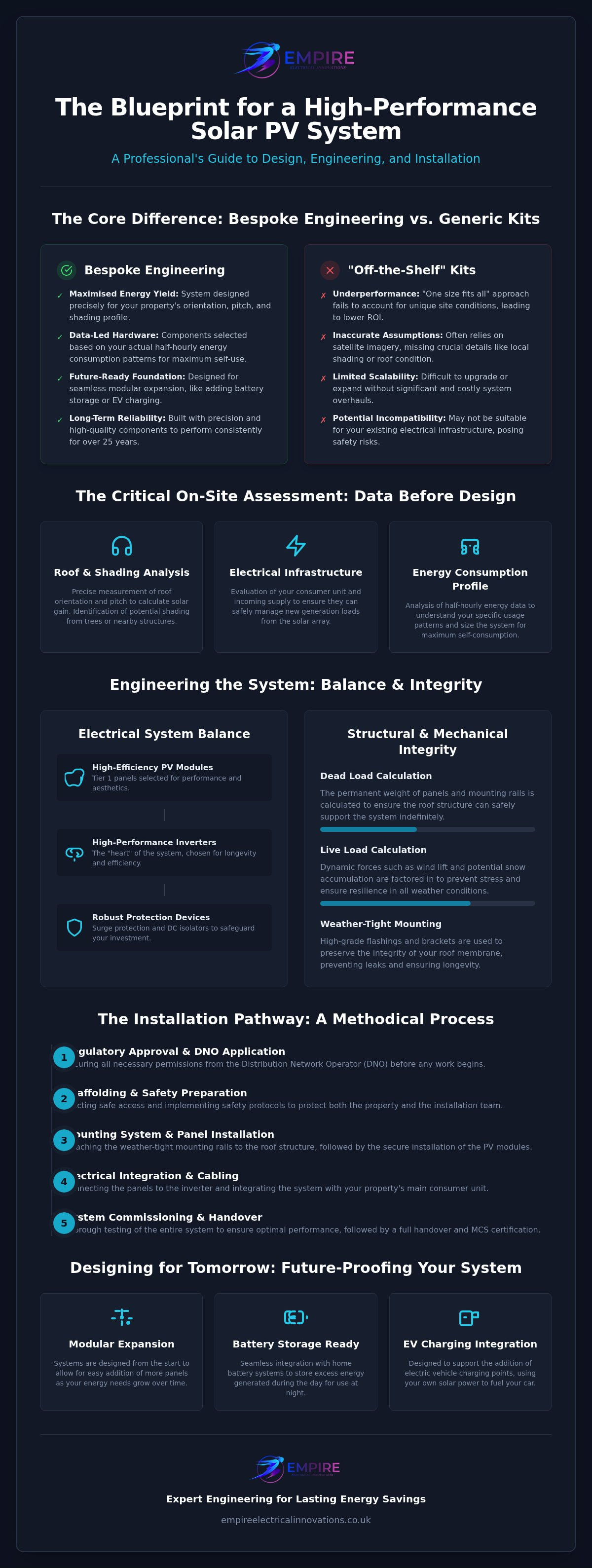
Professional solar PV design and installation is a sophisticated engineering discipline. It's far more than simply placing panels on a roof. A truly efficient system requires a multi-stage process that integrates electrical engineering, structural assessment, and environmental analysis. Whilst many providers offer automated quotes based on satellite imagery, these often miss the micro-nuances that determine long-term ROI. Precision. Performance. Longevity. These are the pillars of a system designed to last decades.
"Off-the-shelf" kits frequently underperform because they assume a "one size fits all" scenario. They don't account for the unique weather patterns of the South East or the specific thermal behaviour of different building materials. A bespoke approach ensures that every component in photovoltaic systems is selected to maximise yield based on your property's precise orientation and pitch. This precision engineering creates a "future-ready" foundation. It allows for seamless modular expansion, such as adding battery storage or EV charging points, as your energy needs evolve without requiring a complete system overhaul.
Why Site Surveys are Non-Negotiable
A physical inspection is the only way to guarantee system accuracy. We assess roof orientation and pitch with precision tools to calculate exact solar gain. This process identifies potential shading from local Hertfordshire landmarks or mature trees that satellite data might overlook. Beyond the roof, we evaluate your existing electrical infrastructure. We must ensure your consumer unit and incoming supply can safely manage new generation loads. We also identify the most efficient cable routes. This approach minimises energy loss and maintains the aesthetic integrity of your property.
Matching Hardware to Energy Profiles
We don't guess your energy needs. We analyse half-hourly energy data to understand your specific consumption patterns. This allows us to size the system for maximum self-consumption, ensuring you use the power you generate rather than exporting it for minimal return. The success of any solar PV design and installation depends on this data-led hardware selection. We choose inverters and power optimisers based on the shading profile of your specific site. This ensures that even if one panel is obscured, the rest of the array continues to perform at peak efficiency. We balance these technical requirements with aesthetic preferences, utilising high-efficiency Tier 1 photovoltaic modules that complement your building's design.
Technical Engineering: Hardware and Structural Integrity
The success of any solar PV design and installation relies on the synergy between its mechanical and electrical components. It isn't just about selecting the most powerful panels. It's about achieving a precise "system balance." This balance involves matching high-efficiency photovoltaic modules with high-performance inverters and robust protection devices. Every component must be industry-standard and certified. This ensures your system remains compliant for insurance purposes and keeps manufacturer warranties intact. Understanding the PV system design basics allows for a more resilient installation that performs consistently for over 25 years.
Inverters are the heart of the system. They convert direct current (DC) from your panels into usable alternating current (AC) for your property. We prioritise inverters known for their longevity and thermal management. A poorly selected inverter becomes a single point of failure, often failing years before the panels. By integrating surge protection and high-quality DC isolators, we safeguard your investment against electrical faults and environmental stress.
Structural Assessment and Wind Loading
Your roof must be more than just a surface; it must be a foundation. We calculate the "dead load," which is the permanent weight of the panels and mounting rails. We also account for the "live load," specifically wind lift and snow accumulation. Precision in solar PV design and installation ensures that these calculations are vital for older properties across Bedfordshire and Buckinghamshire, where timber rafters may require additional reinforcement. Our mounting systems are designed to be weather-tight. We use high-grade flashings and brackets that preserve the integrity of your roof membrane without compromising its lifespan.
Integrating Battery Storage and EV Infrastructure
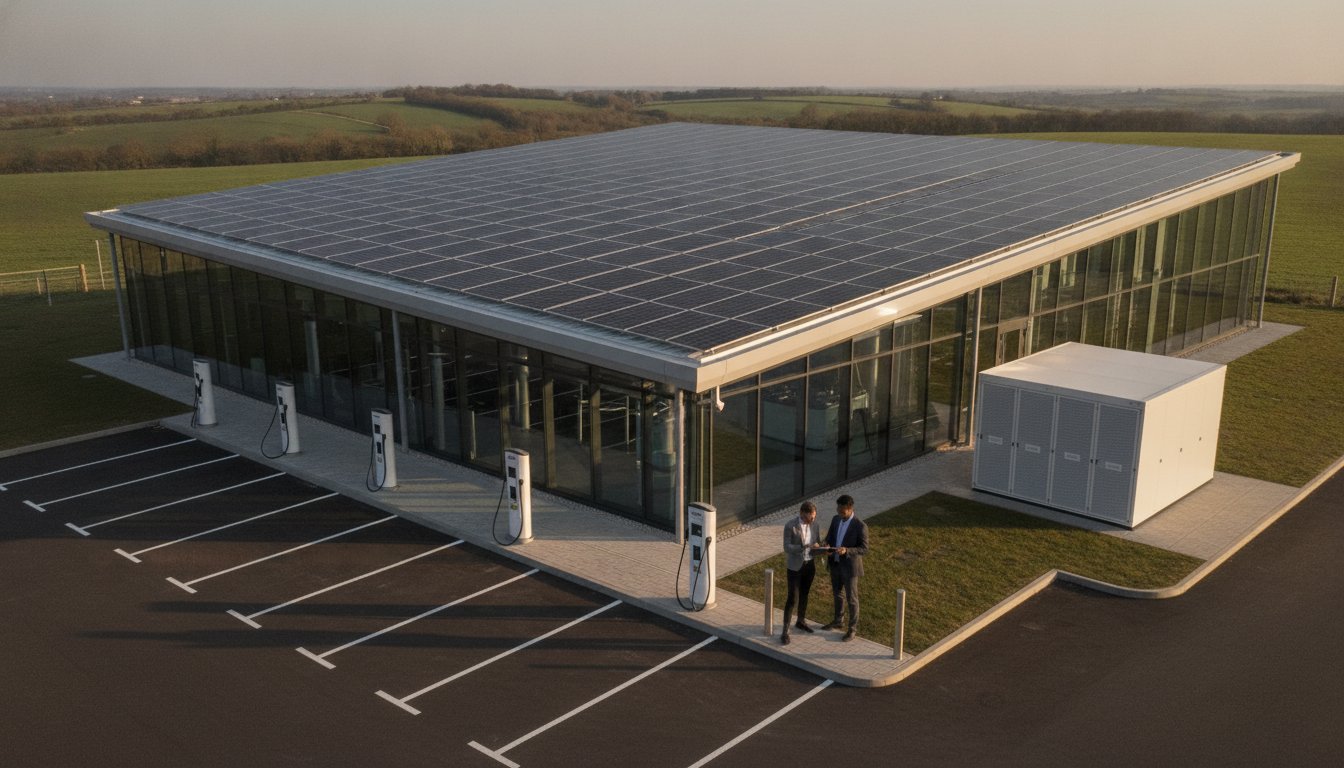
Modern energy needs are dynamic. We design systems that anticipate future demands, such as electric vehicle charging and home energy storage. By utilising hybrid inverters, we allow for the seamless integration of battery storage at the point of installation or as a future upgrade. This approach ensures your solar array supports your transport needs without overwhelming the local grid. Managing peak loads is essential. We engineer systems that remain efficient even during low-generation periods, ensuring you get the most from every ray of light. If you are ready to explore these technical specifications for your property, you can view our full range of bespoke energy solutions.
Compliance, Grid Connection, and Regulatory Standards
Compliance is the bedrock of professional solar PV design and installation. It ensures your system is legal, safe, and eligible for financial incentives. We adhere strictly to the IET Code of Practice for Grid-Connected Photovoltaic Systems. This isn't just about technical accuracy; it's about long-term reliability. For developers in the South East, meeting Part L Building Regulations is a primary driver for solar adoption in new builds. MCS certification remains a vital quality mark. It protects consumers and ensures that components meet rigorous performance standards whilst allowing access to export tariffs.
Regulatory standards evolve rapidly. By 2026, the focus has shifted heavily towards grid stability and fire safety. We prioritise "quiet authority" in our compliance work, ensuring every project meets the highest benchmarks without unnecessary complexity. This methodical approach validates your choice as a property owner or developer, providing peace of mind that the infrastructure is future-proofed and fully insured.
The DNO Application Process
Connecting to the grid requires formal permission from your District Network Operator (DNO). In our region, this is typically UK Power Networks. We distinguish between G98 and G99 applications based on system size and export potential. G98 applies to smaller domestic systems, usually under 16A per phase. G99 is required for larger commercial arrays or systems with substantial battery storage capacity. We manage this entire application process on your behalf. Our engineers understand the nuances of solar photovoltaic system design to mitigate grid constraints. If the local network has limited capacity, we use smart export limitation technology to ensure your system is approved without requiring costly grid reinforcements.
Health, Safety, and Fire Compliance
Electrical safety is paramount. We install DC isolators near the array and the inverter to allow for safe maintenance and emergency shutdown. Rapid-shutdown systems are also a standard requirement to protect first responders in the event of a fire. All cabling must be appropriately rated for DC voltages and protected against UV degradation and environmental wear. At the end of the project, we provide a comprehensive handover pack. This includes as-built schematics, safety documentation, and performance estimates. It's your proof of a compliant, professionally engineered installation that meets all current UK standards.
The Installation Journey: From Scaffolding to Commissioning
The transition from a technical blueprint to a live energy system requires disciplined execution. Whilst the design phase sets the parameters for success, the physical installation is where precision engineering meets workmanship. We approach every project with quiet authority. This means respecting your property, maintaining a tidy site, and ensuring minimal disruption to your daily routine. A typical solar panel installation in Hertfordshire usually takes between one and three days on-site, depending on the complexity of the array and the integration of battery storage.
Methodical planning is essential. We don't just arrive and start mounting hardware. Every step is choreographed to ensure safety and efficiency. This phase of solar PV design and installation is handled by accredited specialists who understand the nuances of both roofing and high-voltage electrical work. By following a structured timeline, we provide clarity and reduce the anxiety often associated with home or business infrastructure upgrades.
On-Site Logistics and Preparation
Safety is our primary priority. The process begins with the erection of secure scaffolding, providing a stable platform for our roofing team. We conduct a final health and safety briefing and a pre-start roof inspection to verify that the structure is exactly as recorded during the initial survey. Component delivery is organised with precision. We coordinate the arrival of panels, inverters, and mounting rails to ensure they don't block access or create unnecessary clutter. Once the site is prepared, we secure the mounting brackets directly to the roof rafters, ensuring a rock-solid foundation for the photovoltaic modules.
Electrical Integration and Commissioning
The electrical phase is where the system truly comes to life. Our electricians install the inverter and any required battery storage in the pre-determined location, typically a loft, garage, or utility space. We then route the DC cabling from the roof to the inverter using discreet, protective conduit. Connecting the system to your main consumer unit requires a brief, planned power outage. After the physical connections are made, we move into the critical commissioning phase. This involves a rigorous battery of tests to verify voltage levels, current flow, and insulation resistance. We also set up your monitoring software. This allows you to track generation and self-consumption in real-time via a smartphone or tablet. Final system verification ensures that the output matches our initial engineering projections before we provide your handover documentation.
If you are ready to begin your transition to clean energy with a team that values technical excellence, you can request a bespoke solar PV quotation today.
Future-Proofing Your Investment with Empire Electrical Innovations
A successful solar PV design and installation is not a transactional event. It is a long-term investment in your property's energy independence. Our design-led approach ensures that the system you install today remains efficient and relevant for the next 25 years. By prioritising high-quality hardware and precise engineering, we deliver a superior return on investment. Precision matters. We don't just install panels; we build energy infrastructure that grows with your needs. This commitment to longevity is what defines our role as a trusted specialist in the South East.
Choosing a local, reliable partner provides security throughout the lifespan of your system. Technology evolves, and energy requirements change. Having a consultant who understands the specific technical history of your installation makes future upgrades seamless. We position solar as the cornerstone of a broader sustainable strategy. It serves as the primary generation source that powers your home, your business, and your transport.
Monitoring for Peak Performance
We provide the tools you need to manage your energy generation actively. Smart monitoring applications allow you to identify generation drops or potential hardware issues before they impact your bills. Professional data analysis helps you optimise your consumption patterns, ensuring you use as much free energy as possible. Our bespoke design philosophy makes future maintenance simpler. By using accessible cable routes and standardised components, we reduce the cost and complexity of occasional servicing.
Real-time tracking: Monitor generation and battery health via mobile apps.
Performance alerts: Receive notifications if your system performance deviates from predicted yields.
Data-led optimisation: Adjust your appliance usage to match peak generation periods for maximum savings.
Expanding Your Energy Ecosystem
Your energy needs in 2026 may look very different by 2030. We prepare your system for this evolution from day one. This includes provisioning for additional panels or expanded battery storage without requiring a complete rewire. Every stage of our solar PV design and installation process is focused on creating a resilient energy ecosystem. For business owners, this foresight is particularly valuable when integrating workplace EV charging points into your infrastructure. A well-designed solar array can significantly offset the increased demand from a growing electric fleet.
Empire Electrical Innovations remains your long-term partner in this transition to net-zero. We provide the technical expertise and quiet authority needed to navigate the complexities of modern energy management. We get the job done right, ensuring your investment is protected for the years to come.
Secure Your Renewable Energy Future
Successful renewable projects rely on meticulous planning and high-performance engineering. As we've explored, the foundation of a reliable system is built on structural integrity, grid compliance, and hardware synergy. Professional solar PV design and installation ensures your property isn't just generating power, but doing so with maximum efficiency and safety for decades to come. Precision. Compliance. Performance. These aren't just goals; they're the standards that protect your long-term ROI.
As local experts in renewable and telecoms infrastructure, we specialise in bespoke engineering for Hertfordshire homes and businesses. Our team delivers compliance-led installations to strict IET and MCS standards, providing the quiet authority and technical excellence your project deserves. We focus on getting the job done right, ensuring your transition to sustainable energy is seamless and secure.
Book your professional solar survey and bespoke quotation today. Transitioning to clean energy is a significant step towards net-zero, and we're here to ensure your journey is methodical, transparent, and built to last. We look forward to powering your future.
Frequently Asked Questions
What is the difference between solar PV design and simple installation?
Design is a multi-stage engineering process, whereas installation is the physical execution of that plan. A professional solar PV design and installation considers shading, orientation, and electrical load to maximise energy yield. Simple installation without bespoke design often leads to hardware mismatches or underperforming arrays. Engineering ensures your system is safe, compliant, and future-proofed for decades of use.
Do I need planning permission for solar PV in Hertfordshire or London?
Most domestic solar installations fall under Permitted Development rights in Hertfordshire and London. You won't usually need formal planning permission unless you live in a listed building or a conservation area with an Article 4 direction. It's always best to check with your local authority or your installer before work begins. We verify these specific requirements during our initial site survey.
How long does a typical solar PV installation take from start to finish?
A typical project takes between four and twelve weeks from the initial survey to final commissioning. The physical installation on-site usually lasts just one to three days. Most of the timeline involves the engineering phase, equipment procurement, and waiting for DNO grid connection approvals. We manage these administrative hurdles on your behalf to keep the project moving forward efficiently.
Will my roof be able to support the weight of solar panels?
Most modern UK roofs are designed to handle the additional dead load of a solar array. A standard panel weighs approximately 20kg, and this weight is distributed across multiple mounting points. For older properties in Buckinghamshire or Bedfordshire, we conduct a structural assessment to ensure the rafters can support both the weight and potential wind lift. If reinforcement is needed, we identify this early in the process.
What is a G99 application and why do I need one for my business?
A G99 application is a formal request to your District Network Operator for permission to connect a system larger than 3.68kW per phase. Businesses typically require this because their generation capacity exceeds standard domestic limits. It is a critical compliance step that ensures your generation doesn't overwhelm the local grid infrastructure. We handle all G99 paperwork to ensure your business remains fully compliant and insured.
How does solar PV design change if I want to add a battery later?
Future-proofing for a battery involves installing a hybrid inverter or ensuring there is space for an AC-coupled unit. If you plan to add storage later, we design the initial array with this expansion in mind. This includes provisioning for the correct cabling and protection devices. It's a cost-effective way to ensure your solar PV design and installation remains adaptable as your energy needs grow.
Is solar PV design and installation different for commercial buildings?
Commercial systems are typically larger and involve more complex mounting solutions, such as ballasted systems for flat roofs. The electrical integration is also more involved, often requiring dedicated sub-boards and advanced fire safety systems. Whilst the core principles remain the same, commercial projects require a deeper focus on grid constraints, structural loading, and long-term asset management to ensure a strong return on investment.
What maintenance does a professionally designed solar system require?
Professionally designed systems require very little active maintenance. We recommend a visual inspection and professional cleaning every few years to maintain peak efficiency. You should also check your monitoring app regularly for generation alerts or hardware issues. A full electrical test and inspection of the inverter and protection devices is advisable every five to ten years to ensure continued safety and performance.
Comments