
Strategic Telecoms for Property Developers: 2026 Guide

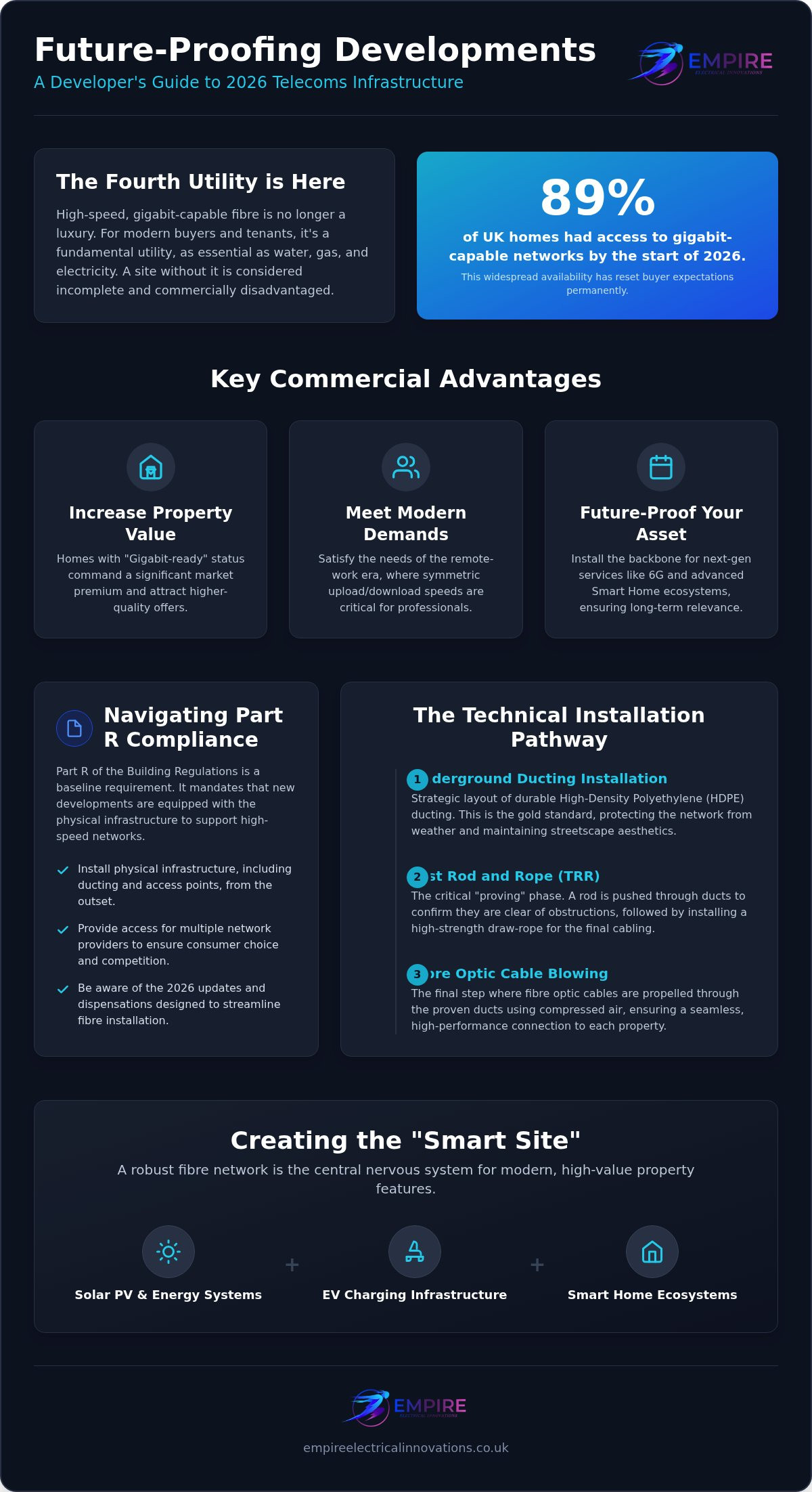
By the start of 2026, gigabit-capable networks reached 89% of UK homes. This means high-speed connectivity is no longer a premium add-on; it's a fundamental utility that buyers and tenants expect from day one. Integrating robust telecoms infrastructure for property developers is now a critical path item that can either enhance property value or, if mismanaged, lead to costly delays and regulatory friction.
You've likely felt the frustration of coordinating multiple utility contractors or waiting weeks for a network provider to adopt your site. It's a common bottleneck that puts handover dates at risk. This guide provides a strategic roadmap to navigate the 2026 landscape, including the latest Part R building regulations and the new September 2026 dispensations for telecommunications work. We focus on practical, real-world application to keep your projects moving.
We'll explore how to achieve full compliance, secure "Gigabit-ready" status, and implement specialist services like fibre blowing and test rod and rope (TRR) without disrupting your build programme. You'll discover how to integrate these digital foundations seamlessly, ensuring your next development is both connected and future-proof.
Table of Contents
The Evolution of Telecoms Infrastructure for Property Developers
Digital connectivity has transitioned from a lifestyle luxury to a non-negotiable requirement. In the 2026 property market, gigabit-capable infrastructure refers to networks supporting download speeds of at least 1,000 Mbps. This standard is now the benchmark for every new development. We view telecoms as the "fourth utility," carrying the same weight as water, gas, and electricity. A site without high-speed data is functionally incomplete and commercially disadvantaged from the outset.
The legal framework has shifted to reflect this priority. The Electronic Communications Code (ECC) grants operators statutory rights to install and maintain equipment on private land. For developers, this means early strategic planning is vital. Mismanaging these relationships can lead to project delays or unexpected access disputes. A foundational knowledge of understanding telecommunications networks helps developers coordinate effectively with utility contractors and network providers. High-quality telecoms infrastructure for property developers doesn't just satisfy regulations; it directly increases property valuation. Homes with "Gigabit-ready" status often command a market premium and sell faster than those with legacy connections.
Meeting Part R Building Regulations
Compliance with Part R is a baseline requirement for modern construction. Developers must ensure their buildings contain the physical infrastructure, such as ducting and access points, to host high-speed networks. The 2026 updates, including Circular 02/2026, have introduced specific dispensations for drilling small holes for fibre installation. These changes aim to streamline the rollout process. Your development must provide access to multiple network providers to ensure consumer choice. Moving from "standard" broadband to mandatory fibre-ready status is no longer optional; it's a legal and commercial necessity.
Buyer Expectations in the Remote-Work Era
The 2026 buyer is tech-literate and demanding. Remote work has made symmetric upload and download speeds a priority. It's no longer just about streaming; it's about high-capacity video conferencing and cloud-based professional tools. Full-fibre is the backbone of the modern "Smart Home" ecosystem, supporting everything from security systems to automated energy management. By installing robust telecoms infrastructure for property developers now, you're future-proofing the property for 6G and the next generation of digital services. This foresight ensures the building remains relevant and valuable for decades to come.
Technical Components of Modern Telecoms Networks
Modern telecoms infrastructure for property developers follows a precise hierarchy of hardware. The network begins at the "spine" or core network, branches into local distribution points, and eventually terminates at the property threshold. For new developments, underground installation is the industry gold standard. It protects the network from weather-related degradation and maintains the visual integrity of the streetscape. Professional installation is vital. Poorly laid ducting or low-grade materials create physical bottlenecks that lead to signal attenuation and service failure. High-quality components ensure the network performs at its rated capacity from day one.
Commercial Telecoms Ducting and Cabling
Designing ducting routes is about more than just digging trenches. It requires a strategic layout that balances installation speed with future accessibility. High-density polyethylene (HDPE) is the preferred material for its durability and resistance to ground chemicals. If you're building in the South East, our telecoms ducting contractors Hertfordshire provide the technical oversight needed for complex sites. This proactive approach ensures your infrastructure is ready for the high demands of gigabit-capable fibre.
Test Rod and Rope (TRR) Procedures
Test Rod and Rope (TRR) is the essential "proving" phase of any project. It involves threading a flexible rod through the duct network to confirm there are no obstructions. Once clear, a high-strength draw-rope is installed. This process is critical because it identifies collapsed ducts or silt build-up before the network provider arrives. It ensures a "path of least resistance" for the final cabling. You can speak to our specialist team to verify your site's readiness through professional TRR services and avoid adoption delays.
Professional Fibre Blowing Services
Fibre blowing utilises compressed air to propel fibre optic cables through pre-installed microducts. This technique is superior to traditional pulling because it eliminates tensile stress on the cable. Pulling can cause micro-fractures in the glass fibre, leading to immediate or delayed signal failure. Blowing allows for faster installation over longer distances, often exceeding 1,000 metres in a single run. This method is precise, safe, and ensures the highest possible signal integrity for your tenants. It's a key part of delivering reliable telecoms infrastructure for property developers who prioritise long-term quality.
Strategic Planning: Integrating Telecoms with Renewables
The concept of the "Smart Site" has redefined how we approach utility installation. Modern developments no longer treat energy and data as separate silos. Instead, they're designed as integrated ecosystems where telecoms infrastructure for property developers acts as the nervous system for renewable energy assets. By coordinating the installation of solar PV, battery storage, and telecoms groundworks, developers can significantly reduce civil engineering costs. Shared utility trenches are a primary example of this efficiency. Placing ducting for fibre alongside electrical cabling reduces site disruption and accelerates the overall build programme.
Efficient groundworks management is essential. When we plan telecoms infrastructure for property developers, we look at the long-term operational needs of the site. This includes ensuring that data pathways are available to every major energy asset. A fragmented approach often leads to retrospective trenching, which is both expensive and damaging to the finished site aesthetics. Early-stage integration ensures that all "fourth utility" components are housed securely and logically from the start. It's a methodical approach that prioritises precision and long-term site viability.
Fibre for Smart Solar and Battery Management
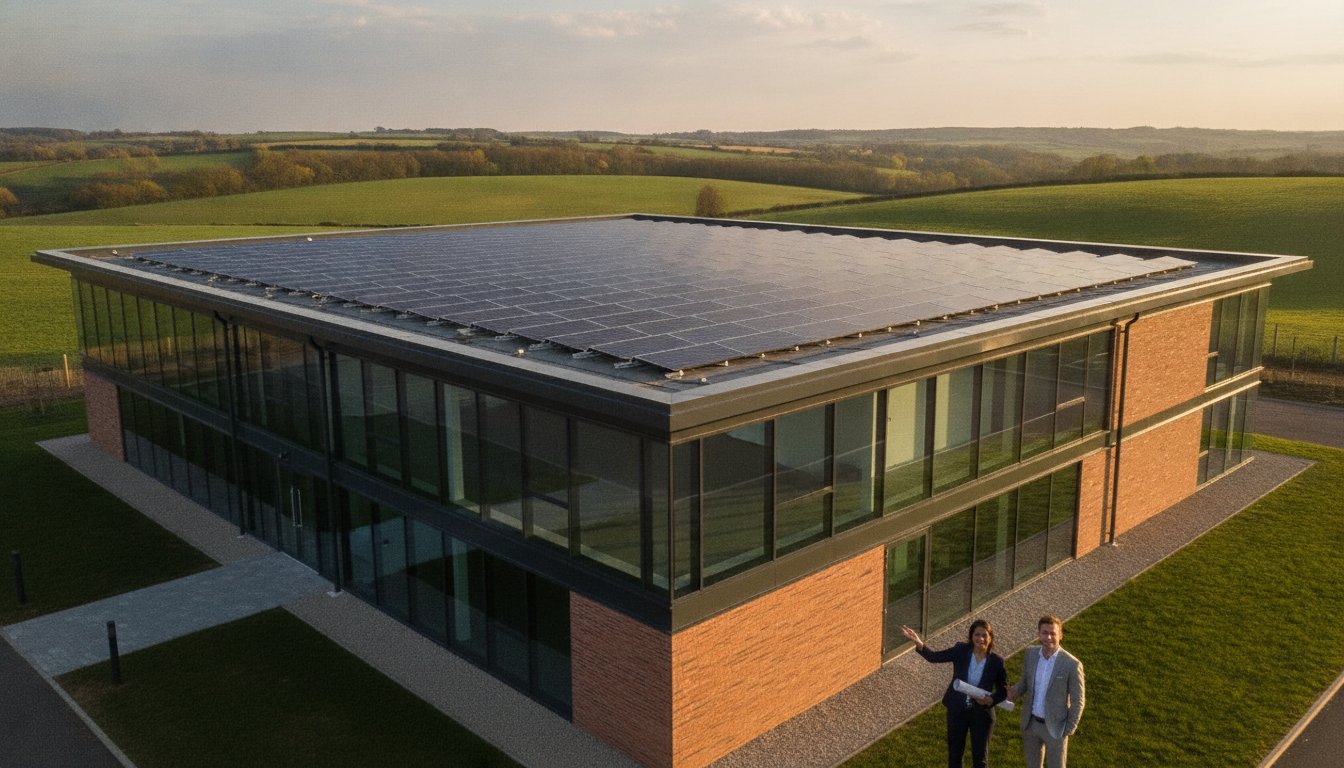
Commercial solar arrays are no longer passive installations. They require real-time data connections to facilitate precise monitoring and performance analysis. Without a reliable network, site managers can't track energy yields or identify faults in the system. We specialise in integrating GivEnergy battery systems with site-wide fibre networks to ensure seamless communication between the storage units and the cloud. For a deeper look at these technologies, explore our guide on solar PV for commercial buildings. This connectivity allows for dynamic load balancing and ensures that stored energy is utilised when it's most cost-effective.
Telecoms for Managed EV Charging Hubs
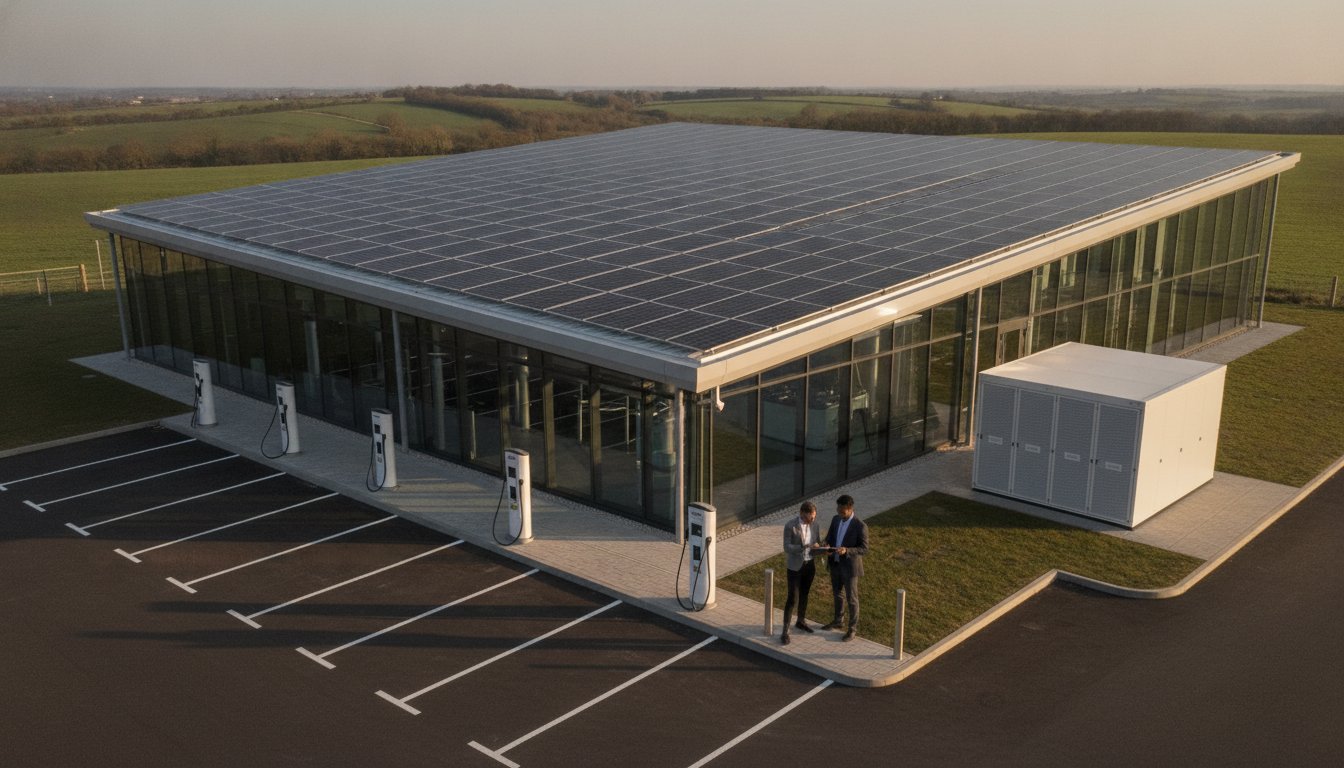
Electric vehicle (EV) charging hubs represent a significant data load for any new development. These chargers must communicate constantly with the National Grid and various payment platforms to function correctly. In residential settings, planning for data-connected charging points is now a standard requirement. Reliable connectivity ensures that smart charging features, such as off-peak scheduling, work without interruption. Our expertise in commercial EV charger installation Hertfordshire focuses on this synergy. We ensure that every charging point is supported by robust telecoms ducting, preventing the connectivity gaps that frustrate end-users and site operators alike.
Compliance and Site Preparation Checklist for Developers
Managing the regulatory environment for modern developments requires a disciplined approach. It involves a coordinated effort between site managers, network operators, and specialist contractors. Early-stage engagement is the most effective way to prevent the "last-mile" delays that often plague hand-over dates. You must ensure all telecoms infrastructure for property developers meets the technical specifications of providers like Openreach or Virgin Media. Failure to adhere to specific ducting depths or bend-radius requirements can result in the network operator refusing to adopt the site, leading to expensive remedial works.
The Electronic Communications Code (ECC) provides the legal framework for land access, but practical site readiness is what drives project momentum. We recommend a methodical approach to site preparation, ensuring every component is documented for final commissioning. This transparency builds trust with property management teams and ensures a smooth transition once the build is complete. If you need expert guidance on site-wide connectivity, you can book a professional telecoms site survey to identify potential constraints before they impact your build schedule.
Step-by-Step Infrastructure Readiness
1. Site survey and utility mapping: Before any ground is broken, you must identify existing utility constraints. This prevents accidental strikes and ensures the new network integrates with existing local distribution points.
2. Ducting installation: Precision is non-negotiable. Installers must follow strict depth guidelines to protect the infrastructure from future surface work and maintain specific bend-radii to allow for cable flexibility.
3. TRR and proving: Once the ducting is in place, Test Rod and Rope (TRR) is used to verify the integrity of the path. This confirms the network is clear of silt, debris, or structural collapses.
4. Fibre installation: The final stage involves blowing or pulling the fibre optic cable to the terminal. This completes the physical link from the spine to the property threshold.
Regulatory Compliance and Part L Synergies
While Part R focuses on physical connectivity, there's a growing synergy between telecoms and Part L carbon-reduction targets. Smart data infrastructure allows for the precise monitoring of energy-intensive systems, which is essential for meeting modern sustainability goals. High-speed networks support the real-time adjustments needed for efficient heat pump operation and solar energy distribution. Implementing robust telecoms infrastructure for property developers ensures these smart systems can communicate without interruption.
For more information on meeting these standards, read our guide on Part L building regulations solar panels. Properly documenting this infrastructure is now a key requirement for building control sign-off, ensuring your development meets the highest professional standards. This methodical documentation provides a clear audit trail for compliance and future maintenance.
Empire Electrical Innovations: Your Specialist Infrastructure Partner
Empire Electrical Innovations operates as a dedicated partner for the construction sector. We provide bespoke telecoms infrastructure for property developers across Hertfordshire, London, and the South East. Our approach is defined by quiet authority and technical precision. We understand that on a busy building site, you need contractors who deliver without constant supervision. We provide exactly that. Our "no-nonsense" attitude ensures that complex data and electrical installations are completed to the highest professional standards, avoiding the delays that often derail project timelines.
Our competitive edge lies in our dual expertise. Because we also specialise in Solar PV and EV charging, we understand the technical interplay between energy and data. We don't just lay cables; we design integrated utility solutions that increase the long-term value of your development. This holistic view ensures that your site is compliant, future-ready, and functionally superior. By partnering with us, you're investing in a methodical, disciplined team that values workmanship over empty promises.
Expertise in Hertfordshire and Beyond
Our team possesses deep local knowledge of ground conditions and planning authority requirements throughout the South East. This regional expertise is vital for navigating the specific challenges of Hertfordshire and London infrastructure projects. We've built a proven track record of delivering high-specification installations for schools, business parks, and residential developers. We know the local landscape, and we know how to get the job done right the first time.
We manage every phase of the project with disciplined organisation. This begins with a detailed site survey and continues through to final commissioning. By handling the technical complexities of TRR and fibre blowing in-house, we provide a single point of accountability. This streamlined management style gives site managers the confidence that their telecoms infrastructure for property developers will meet all regulatory standards for hand-over without the need for remedial work.
Start Your Infrastructure Project
Successful developments are built on reliable partnerships. We collaborate closely with site managers to ensure our work fits seamlessly into the broader build programme. Our goal is to provide a stress-free integration of telecoms infrastructure, allowing you to focus on the core construction while we handle the digital foundations. We prioritise clear communication and performance, ensuring we hit every milestone on your schedule.
We offer a comprehensive site survey and a detailed quotation to help you plan your budget with certainty. This initial assessment identifies potential constraints early, ensuring there are no surprises during the installation phase. Our commitment to high standards makes us the preferred specialist for developers who value longevity and reliability. Contact Empire Electrical Innovations for your telecoms infrastructure project today to discuss your next development and secure a partner dedicated to your project's success.
Securing Your Development's Digital Future
Modern connectivity is now as fundamental as power or water. We've explored how gigabit-ready status and integrated utility planning can streamline your build programme whilst satisfying the 2026 buyer's demand for symmetric speeds. By prioritising robust telecoms infrastructure for property developers from the earliest groundworks, you avoid the common pitfalls of adoption delays and regulatory friction.
Empire Electrical Innovations provides the technical precision needed for these complex installations. As an NICEIC Approved Contractor equipped with specialist TRR and fibre blowing machinery, we're trusted by developers across Hertfordshire and London to deliver compliant, future-ready sites. We ensure every duct is clear and every cable is installed with surgical accuracy, protecting your reputation and your project's timeline.
Our methodical approach handles the physical complexities of infrastructure so you can focus on delivering high-quality homes and commercial spaces. Discuss your development’s infrastructure needs with our specialists to ensure your next project is connected from day one. We look forward to partnering with you on your next site.
Frequently Asked Questions
What are the legal requirements for telecoms in new-build developments?
Part R of the Building Regulations is the primary legal driver. It mandates that new-build homes include physical infrastructure for high-speed electronic communications. This requires developers to install the necessary ducting and termination points to allow residents to access multiple network providers. Since January 2025, gigabit-capable connections have been the mandated standard for most new residential projects across the UK.
How does fibre blowing differ from traditional cable pulling?
Fibre blowing uses compressed air to float the cable through microducts, whereas traditional pulling relies on mechanical tension. Blowing is superior because it eliminates the risk of tensile stress, which can cause microscopic fractures in the glass fibre. This modern technique allows for faster installation over longer distances and ensures the long-term integrity of the telecoms infrastructure for property developers.
What is Test Rod and Rope (TRR) in telecoms infrastructure?
Test Rod and Rope (TRR) is a diagnostic procedure used to prove the integrity of underground ducting. A specialist rod is threaded through the duct to identify blockages, silt, or structural collapses. Once the path is verified as clear, a draw-rope is installed. This ensures that when the network provider arrives, the cabling can be installed without delay or remedial excavation.
Do property developers have to pay for fibre installation?
Developers are typically responsible for the costs associated with on-site physical infrastructure, such as trenching and ducting. Whilst some network operators offer subsidies for larger sites, there is often a cost-cap per premise. If the installation cost exceeds this limit, the developer must cover the difference. It's essential to verify these costs with your chosen provider during the early planning stage.
Can telecoms ducting be shared with other utilities like EV charging?
Telecoms ducting and electrical cabling for EV chargers can share the same utility trench, but they cannot share the same physical duct. To maintain safety and prevent signal interference, data and power must be housed in separate, colour-coded conduits. Coordinating these groundworks simultaneously reduces site disruption and civil engineering costs, creating a more efficient and organised smart-site infrastructure.
How does gigabit-ready infrastructure affect property value in 2026?
Gigabit-ready status is a significant value driver. As of January 2026, gigabit-capable networks reach 89% of UK homes, making high-speed connectivity a standard expectation rather than a luxury. Properties lacking this infrastructure are often viewed as technically obsolete, leading to lower valuations and longer times on the market. Robust telecoms infrastructure for property developers ensures the asset remains competitive in a remote-work economy.
What is the role of the Electronic Communications Code for developers?
The Electronic Communications Code (ECC) grants network operators statutory rights to install and maintain equipment on private land. For developers, the code regulates how land access is negotiated and how equipment is valued. Understanding the ECC is vital for managing long-term liabilities and ensuring that any infrastructure installed on-site doesn't impede future development or complicate land sales during the hand-over process.

Comments