
Top Renewable Energy Contractors in the South East: 2026 Selection Guide

Updated: Aug 1
The South East is currently the most challenging region in the UK for renewable energy deployment. With grid capacity reaching its limits and the 2027 Future Homes Standard approaching, finding reliable solar panel installers South East is now a high-stakes technical requirement. You've likely found that staying ahead of Part L building regulations whilst avoiding uncertified traders is a constant source of frustration. It's difficult to feel secure when the local infrastructure seems to be playing catch-up with your sustainability goals.
This selection guide provides the clarity you need to future-proof your property or business. We'll outline how to evaluate contractors based on the latest 2026 MCS quality standards and bespoke integration capabilities. You'll discover how to secure a fully compliant system that reduces operational costs and integrates seamlessly with battery storage. We provide a methodical framework to ensure your next energy project is handled by a partner who prioritises precision, workmanship, and long-term value.
Table of Contents
Navigating the Renewable Energy Landscape in the South East
The South East corridor is currently experiencing a period of unprecedented energy transformation. High population density and a concentration of commercial hubs across Hertfordshire, Buckinghamshire, Bedfordshire, and Cambridgeshire have pushed the existing infrastructure to its limits. By July 2026, the demand for decentralised power has shifted from a "green choice" to an operational necessity. Professional solar panel installers South East must now act as infrastructure consultants rather than simple equipment fitters.
The broader shift toward Renewable energy in the United Kingdom has created a surge in local demand that the regional grid often struggles to accommodate. This is particularly evident in the Home Counties where the electrical network was not originally designed for massive two-way power flows from commercial solar arrays and EV charging clusters. Adapting to this environment requires a methodical approach to site assessment and energy management.
Regional Planning and Grid Constraints
Planning permission remains a significant hurdle. Hertfordshire and Buckinghamshire contain numerous conservation areas and listed buildings where aesthetic compliance is mandatory. Expert contractors must navigate these local authority requirements whilst ensuring the system performs at peak efficiency. Securing reliable solar panel installers South East who understand these regional nuances is the difference between a seamless project and a regulatory failure.
Grid capacity is the second major challenge. District Network Operator (DNO) applications in the South East are increasingly complex. Securing a connection for a large-scale project requires technical precision and early-stage engagement. Without a robust DNO strategy, projects face lengthy delays or unexpected costs. We prioritise these technical assessments during our initial site surveys to ensure project viability from day one. It's a no-nonsense approach to technical infrastructure.
Sector-Specific Energy Trends for 2026
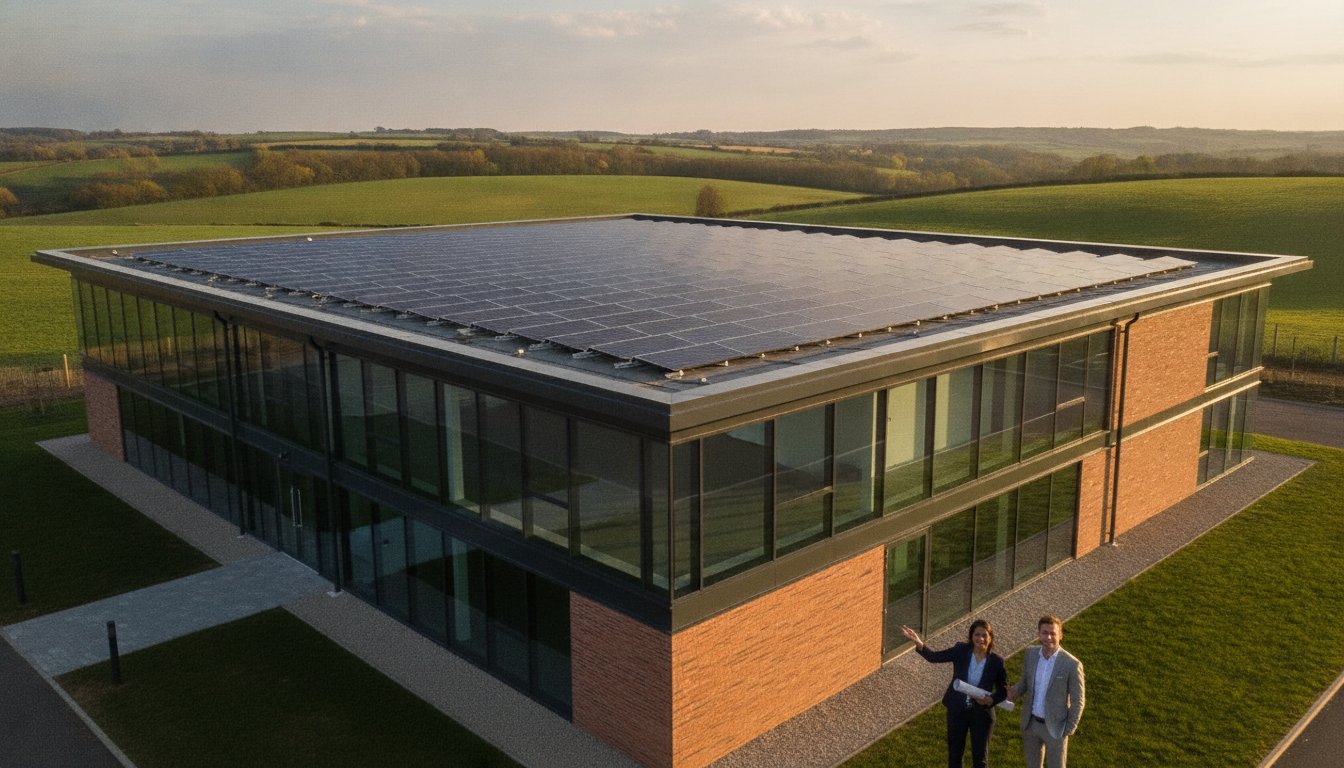
Commercial and public sectors are leading the adoption of integrated technologies. Business parks in Bedfordshire are now prioritising industrial-scale battery storage to mitigate high peak-demand charges. This allows them to store solar energy generated during the day and use it when grid prices are highest. It's a logical step for energy security.
Residential developers are also facing new mandates. Compliance with the Part L building regulations is now standard for new-builds, making solar PV a core component of structural design. Additionally, we are seeing a rise in multi-disciplinary projects. For example, many clients now require telecoms ducting in Hertfordshire to be installed alongside renewable infrastructure. This creates a unified approach to site connectivity and power, ensuring the property is future-ready and fully supported.
Essential Criteria for Selecting Specialist Electrical Contractors
Selecting reliable solar panel installers South East requires a methodical evaluation of technical credentials. It's no longer just about the hardware. It's about the installer's ability to navigate the complex regulatory environment of 2026. The UK 2024 Energy Policy Review highlights the critical role of high-standard installations in meeting national decarbonisation targets. Without MCS and NICEIC accreditations, you risk more than just poor performance. You lose eligibility for the Smart Export Guarantee (SEG) and other financial incentives. The MCS standards in 2026 now focus heavily on on-site quality rather than just paperwork, making the choice of contractor even more vital for long-term reliability.
Compliance and Building Standards
Professional contractors ensure every installation aligns with the latest safety standards. In 2026, compliance isn't optional. For property developers, meeting the Part L building regulations is a core requirement for project handover. We provide the detailed documentation required for insurance and building control. This methodical approach ensures your investment is protected from day one. It's about precision and workmanship. A specialist contractor understands that a compliant system is a secure asset.
Bespoke Design and Future-Proofing
Generic solar kits often fail to deliver expected yields in the South East corridor. A trusted specialist provides a bespoke design that accounts for specific roof orientations and shading profiles. We ensure systems are battery-ready from the start. This allows you to integrate storage solutions easily when your energy demands grow. Selecting components with 25-year warranties reflects a commitment to longevity. It's a partnership-first approach to technical infrastructure. We focus on creating systems that adapt to your evolving needs.
Commercial arrays require ongoing maintenance to maintain peak performance. Reliable contractors offer structured support packages that include remote monitoring and annual inspections. This proactive service prevents minor issues from becoming costly operational disruptions. We believe in a partnership-first approach. This means providing clear communication and technical support long after the initial commissioning. For a precise assessment of your property's potential, we recommend starting with a bespoke site survey to identify the most efficient configuration for your needs.
A Roundup of Core Renewable Technologies for 2026
High-efficiency Solar PV remains the foundation of any robust energy strategy in the South East. In 2026, the technology has reached new levels of precision. We now deploy N-type TOPCon and Heterojunction (HJT) modules that offer superior conversion rates, even in the variable light conditions typical of the Home Counties. The UK's net zero plans and progress have accelerated the adoption of these high-performance systems. Leading solar panel installers South East focus on these advanced technologies to ensure clients receive the highest possible yield from their available roof space. It's a no-nonsense approach to technical performance.
Smart energy management is the final component of a modern installation. Using data-driven platforms allows businesses to track performance and ROI in real-time. You can monitor self-consumption rates and export earnings through the Smart Export Guarantee with absolute clarity. This methodical oversight ensures your renewable assets are always performing at their peak.
Solar PV and Battery Integration
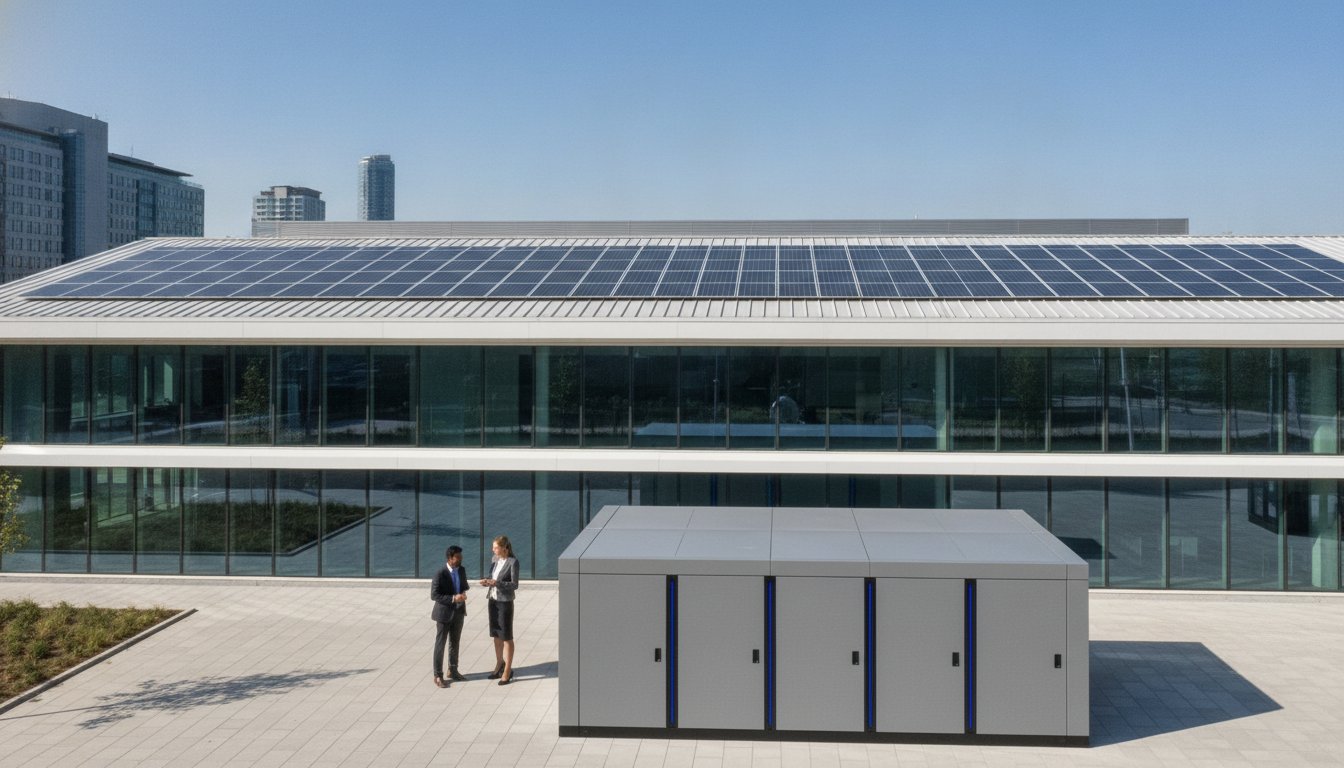
Battery storage has moved from an optional extra to a core requirement for commercial energy security. We specialise in solar battery installation in Hertfordshire, utilising GivEnergy systems for their reliability and scalability. When evaluating storage, the choice between AC-coupled and DC-coupled systems is critical. DC-coupled systems are generally more efficient for new installations because they reduce conversion losses. AC-coupled units offer a versatile solution for retrofitting storage to an existing array. Both technologies enable peak-shaving and load-shifting strategies. This allows you to store energy when it's cheap or self-generated and use it during high-tariff periods, significantly reducing operational costs.
EV Infrastructure and Commissioning
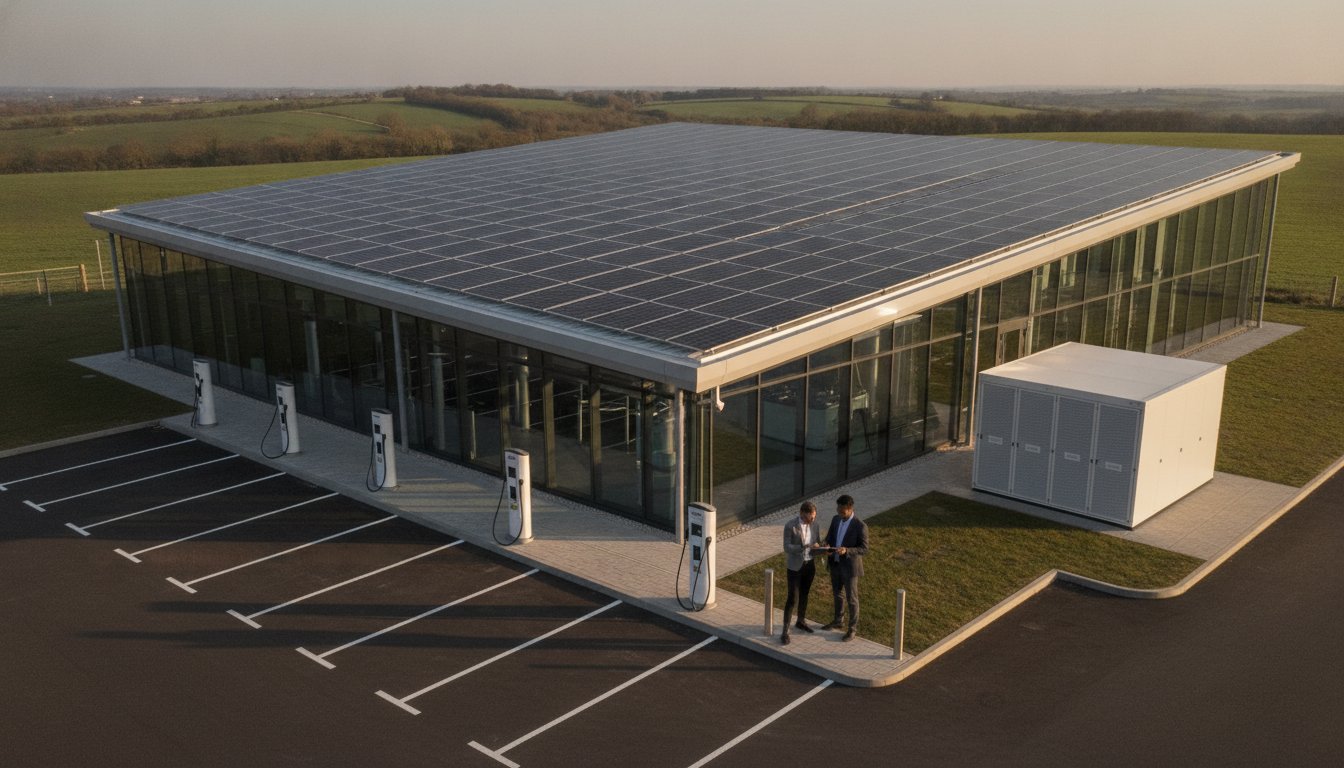
Workplace charging is now an essential workplace utility. Planning for commercial EV charger installation in Hertfordshire requires a strategic assessment of your site's total electrical load. Professional commissioning is the most vital step in this process. It ensures that load balancing is correctly configured to prevent site-wide power issues. By integrating EV chargers with your solar and battery infrastructure, you can power your fleet using onsite generation. This creates a closed-loop energy system that protects your business from volatile market prices. It's a partnership-first approach that prioritises long-term value and technical stability. Expert solar panel installers South East must provide this level of integrated thinking to ensure your infrastructure is truly future-ready.
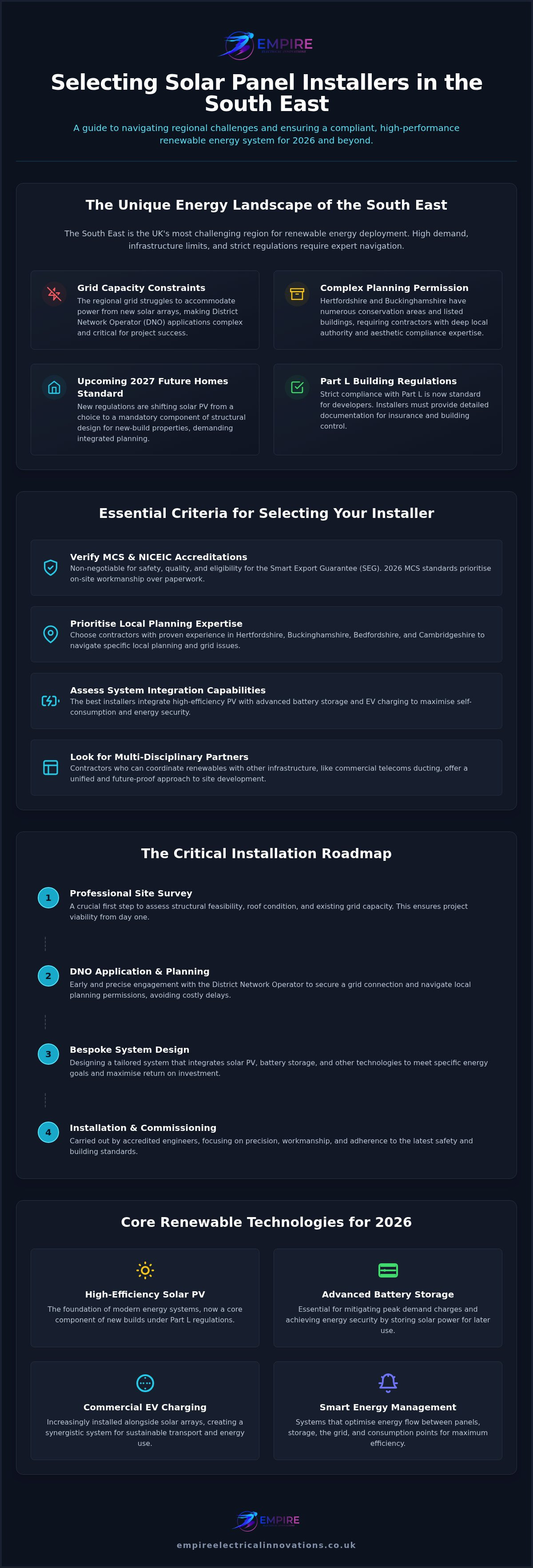
From Site Survey to Commissioning: The Installation Roadmap
A successful renewable energy project is built on technical precision and methodical planning. The transition from initial interest to a fully operational system requires a structured approach to ensure longevity and compliance. Leading solar panel installers South East differentiate themselves through the depth of their pre-installation phase, ensuring that every design is rooted in real-world data rather than generic estimates. This roadmap provides a secure path to energy independence.
The Critical Role of the Site Survey
The process begins with a professional solar survey and quote. This isn't a simple visual inspection. We analyse 12 months of historical energy data to right-size your solar and battery system, ensuring it meets your actual consumption patterns. This stage identifies potential shading issues from surrounding structures or vegetation and determines if any electrical infrastructure upgrades are required to support the new load. For larger commercial buildings, we conduct structural feasibility assessments to confirm the roof can support high-density arrays. This data-driven approach allows us to provide a transparent, no-obligation quotation that reflects the true potential of your property.
Project Management and Handover
The physical installation phase is managed with a focus on workmanship and safety. In high-density South East environments, managing site access and logistics is critical to avoid operational disruption. Specialist contractors prioritise health and safety, ensuring all work meets 2026 standards whilst minimising downtime for your business or tenants. Once the hardware is in place, the project moves to the final commissioning phase. This includes G99 testing to satisfy District Network Operator requirements and ensure the system is safely integrated with the local grid.
The final handover is a collaborative process. We provide comprehensive training for your team on how to use energy monitoring software, allowing you to track performance and ROI in real-time. We also finalise your MCS certification, which is the essential document required to register for export tariffs and begin earning from your surplus energy. It's a partnership-first approach that ensures you're fully supported long after the last panel is fitted. To start your project with a technical assessment, you can book your free site survey with our specialist team today.
Why Empire Electrical Innovations Leads the South East Market
The complexity of modern infrastructure requires more than just standard electrical fitting. We position ourselves as a multi-disciplinary partner, bridging the gap between renewable energy generation and high-speed data connectivity. Whilst many solar panel installers South East focus exclusively on PV modules, we provide a unified approach to site services. This technical breadth allows us to support property developers and business owners with a single, highly disciplined point of contact for their entire infrastructure needs.
Our commitment to the South East is rooted in local expertise. We serve Hertfordshire, Bedfordshire, Buckinghamshire, and London with a methodical, no-nonsense attitude toward delivery. By combining solar PV and battery storage with commercial telecoms infrastructure, we ensure your site is built for the demands of the next decade. This integrated capability is a core pillar of our service, providing stability and precision in a rapidly evolving market.
Integrating Energy and Connectivity
Modern commercial tenants now view high-speed connectivity as a non-negotiable utility. We specialise in telecoms ducting in Hertfordshire, providing the essential groundwork for fibre-ready sites. There is a clear technical synergy between EV charging infrastructure and telecoms ducting. Installing these systems simultaneously reduces site disruption and lowers overall project costs. Our expertise in fibre blowing and cabling ensures that your property is as connected as it is energy-efficient. It's a logical, capability-led strategy for future-proofing assets.
Trusted Expertise and Partnership
We operate with a sense of quiet authority. Our reputation is built on workmanship and clear communication rather than high-pressure sales tactics. This grounded approach has made us a trusted partner for schools, business parks, and residential developers across the region. We understand that every project has unique constraints, whether it's managing grid capacity or meeting strict planning requirements in conservation areas. We prioritise your specific needs through a partnership-first model that values long-term performance over simple transactions.
Starting your transition to sustainable, connected infrastructure is a methodical process. We recommend a technical assessment to identify the most effective configuration for your site. This ensures every component, from the solar array to the telecoms ducting, is perfectly aligned with your operational goals. Contact our specialist team to arrange your bespoke solar PV survey and discover how we can secure your property's energy and data future.
Future-Proofing Your South East Energy Infrastructure
The transition to decentralised power in the South East is a technical challenge that requires a methodical approach. Selecting the right solar panel installers South East is about more than hardware; it's about finding a partner who understands the intersection of grid capacity, Part L compliance, and site connectivity. By prioritising MCS and NICEIC accredited standards, you ensure that your investment is secure, compliant, and optimised for long-term savings.
Empire Electrical Innovations provides the precision and workmanship needed to navigate these regional complexities. As specialist GivEnergy installers with full South East coverage, we bridge the gap between high-performance energy systems and essential telecoms infrastructure. We focus on delivering bespoke solutions that integrate seamlessly into your property or business operations. Our quiet authority approach ensures you receive expert guidance without high-pressure sales tactics.
The first step toward a resilient energy future is a technical assessment based on real-world data. Book your free South East site survey and bespoke quotation today to secure your infrastructure for 2026 and beyond. We look forward to supporting your transition to a cleaner, more efficient power strategy.
Frequently Asked Questions
What should I look for in a renewable energy contractor in the South East?
You should prioritise contractors who hold current MCS and NICEIC accreditations whilst demonstrating deep knowledge of regional District Network Operator (DNO) constraints. Professional solar panel installers South East must provide technical evidence of their workmanship and structural assessment capabilities. It's vital to choose a partner who offers bespoke designs rather than generic kits to ensure your system meets specific energy demands.
Do I need planning permission for solar panels on a commercial building in London?
Most commercial solar installations fall under Permitted Development rights, but you will likely need full planning permission if your building is listed or situated in a conservation area. London has a high concentration of these protected zones; this makes early engagement with local authorities essential. Your contractor should identify these constraints during the initial feasibility study to prevent regulatory delays.
How much can a business save by installing battery storage in 2026?
Businesses can significantly reduce operational costs by using battery storage to perform peak-shaving and load-shifting. By storing energy during low-tariff periods or from daytime solar generation, you avoid the most expensive peak-demand charges. This strategy provides a secure buffer against volatile energy markets and maximises the self-consumption of your generated power without relying on the grid during peak hours.
What is Part L compliance and why does my contractor need to know it?
Part L of the Building Regulations sets the legal standards for the energy performance and carbon emissions of new and existing buildings. Your contractor must understand these rules because they're required to prove the installation contributes to the building's overall CO2 reduction targets for project handover. Failure to meet these standards can lead to insurance complications and may prevent a property from being legally occupied.
Can you install EV chargers and solar panels at the same time?
You can and should install EV chargers and solar panels simultaneously to reduce site disruption and lower overall project costs. Integrating these technologies allows for advanced load balancing; this ensures your vehicle fleet is powered by onsite generation without overloading your primary electrical supply. This unified approach creates a more efficient and resilient energy infrastructure for any commercial property.
What are the benefits of using a contractor that handles both renewables and telecoms?
Using a multi-disciplinary contractor provides a single point of contact for both energy and data infrastructure, which is essential for modern, fibre-ready sites. This synergy allows for the coordinated installation of telecoms ducting alongside solar cabling, reducing the need for multiple site visits. It ensures your property is both energy-efficient and fully connected, making it more attractive to high-end commercial tenants.
How long does a typical commercial solar installation take in the South East?
A typical commercial solar installation usually takes between one and three weeks for the physical onsite work, depending on the system's scale. However, the pre-installation phase, including DNO applications and structural assessments, can take several months to finalise. A methodical project management approach is required to coordinate these stages and ensure solar panel installers South East don't disrupt your daily business operations.
Is a site survey really necessary before getting a quote?
A professional site survey is absolutely necessary to provide an accurate and transparent quotation based on real-world data. It allows the technical team to analyse your historical energy usage, identify shading issues, and assess the structural integrity of your roof. Without this technical foundation, any quote provided is merely an estimate and often leads to unexpected costs or system underperformance during the installation phase.
Comments